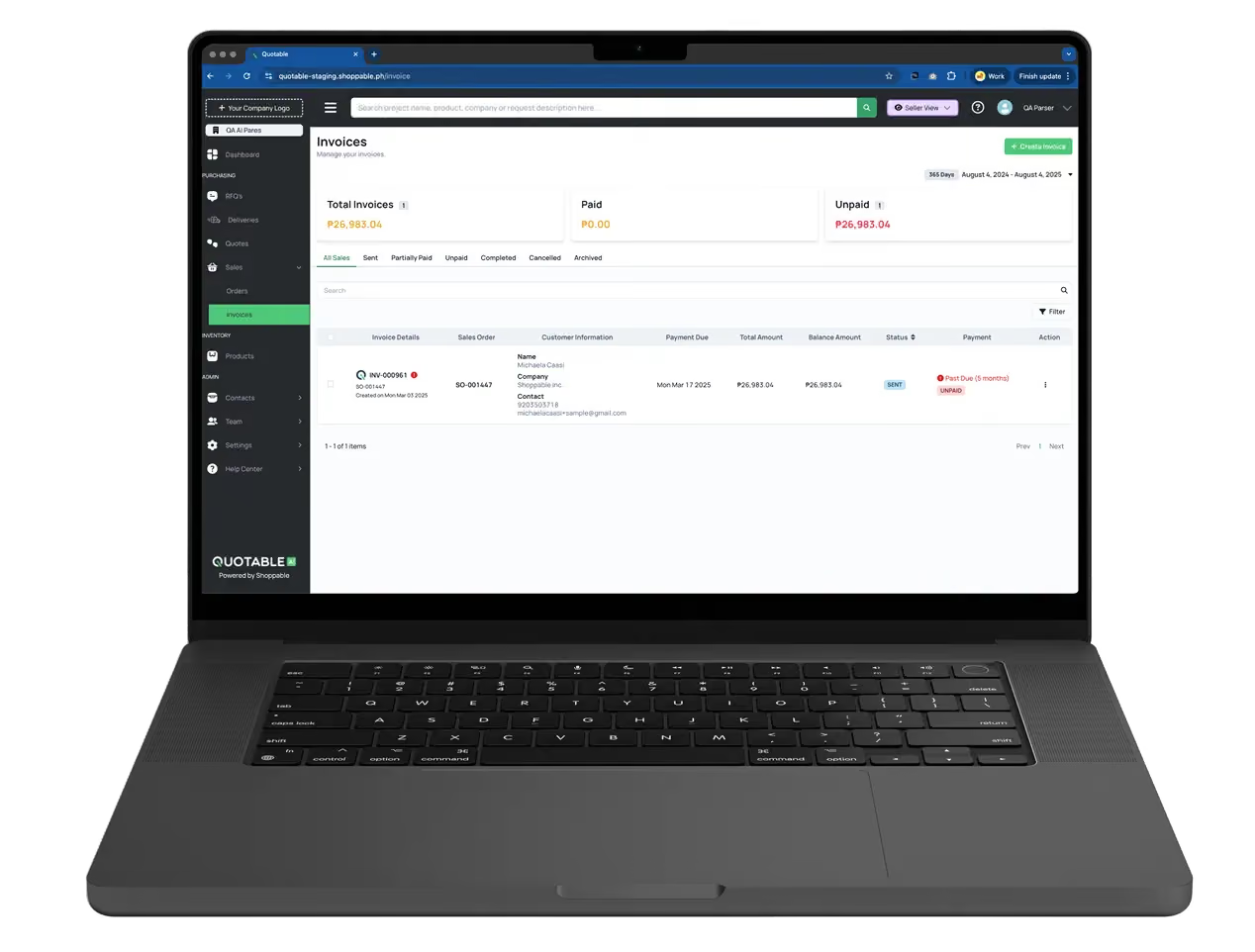

Your SaaS renewals sit in someone's inbox. Facilities orders live in a spreadsheet. Maintenance, repair, and operations (MRO) requests come in over email. Nobody sees any of it until it's on the books. That's the gap indirect procurement software closes. It pulls those purchases into view before they land, helping teams avoid surprises at month-end.
But choosing the right software starts with understanding how your indirect buying works, not comparing vendor feature lists.
After all, rogue spend rarely comes from a lack of discipline. Often, the problem is software that doesn't fit your purchasing categories, approval chains, or supplier types. By mapping your spend profile to the right software tier before evaluating vendors, you can catch unauthorized purchases before they happen instead of chasing them after the fact.
Main Takeaways
- Indirect procurement software is built for purchases that vary in type and frequency. Direct procurement tools focus on more predictable production needs.
- Rogue spend appears in IT and SaaS, facilities and MRO, marketing, travel, and contingent labor. People buy outside systems that don't fit each category.
- Spend analytics, automated sourcing, approval routing, and supplier management form a loop. Approval routing stops unapproved purchases before they happen.
- Match your biggest gap to a platform type. Purchasing controls point to P2P. Sourcing leverage points to S2P. Cross-system teamwork points to orchestration.
- Check payment handoffs, two-way ERP sync, and AI claims on your own documents before you buy.
What Indirect Procurement Software Manages (and Why It's Not "Lighter" Direct Procurement)

Indirect procurement software gives every purchase outside your finished product one home. Sometimes called purchasing software, it brings together intake, approvals, and purchase orders (POs). It also centralizes supplier messages, invoice matching, and spend reports across teams.
When those steps run through email, Slack, and spreadsheets, nobody sees the spend until it's booked. By bringing purchases into view earlier, the software gives teams a chance to review and approve spending before it happens. Adding more staff isn't necessarily the answer, either. The Hackett Group projects procurement workloads will rise 8% in 2026, while operating budgets fall 0.4%.
The teams shopping for indirect procurement software are often led by procurement managers, operations leads, or finance leaders whose firms have outgrown spreadsheets. But not all procurement software is built for their needs. Direct procurement software, for example, is built around bills of materials and demand forecasts. It also integrates with material requirements planning (MRP) systems and production schedules.
Indirect purchasing works differently. Spend is high-variety and hard to predict, often spanning dozens of categories and hundreds of suppliers. Managing that complexity requires software designed for a different set of workflows.
Direct vs. Indirect vs. Services Procurement: Why the Tooling Differs
Procurement comes in three types: direct, indirect, and services. Each one buys, manages suppliers, and approves spend in its own way. So each needs its own software.
- Direct procurement: Raw materials and parts that end up in your finished product. Buying is forecast-driven and recurring. Volume is high and suppliers are few. Think of a manufacturer ordering steel coils from three contracted mills.
- Indirect procurement: Everything you buy to run the business but don't resell. Buying is ad hoc and crosses teams. Many suppliers are involved. Picture an ecommerce brand buying packaging, SaaS tools, and office cleaning from 40+ vendors.
- Services procurement: Expert, contingent, and outsourced labor. Work runs on statements of work and milestones. Procurement often doesn't manage it. Hiring a logistics consulting firm or a contract design team fits here.
These three run on such different rhythms that software built for one rarely serves the others well. Direct systems assume stable suppliers, demand forecasts, and BOM-driven (Bill of Materials) orders. Indirect spend breaks all three. Requesters sit in every team, so approval routing has to flex.
A SaaS renewal and an MRO order follow different paths. That calls for category-aware intake. You're also adding one-off and long-tail vendors all the time, so supplier onboarding has to scale. Many procurement management software suites started direct-first. They added indirect later. That mismatch is where rogue spend begins.
5 Indirect Spend Categories Where Rogue Spend Starts

Indirect spend falls into five categories, each with its own purchasing patterns and challenges. Rogue spend means purchases made outside approved channels, and it can be harder to spot in some categories than others. Understanding where these gaps occur is the first step toward bringing purchases under control.
IT and SaaS
SaaS is one of the fastest-growing indirect categories. It's also the hardest to govern, given the sheer number of subscriptions teams manage. Companies in Zylo's dataset average 305 apps, according to Zylo's 2026 SaaS Management Index. In the past year, 78% of IT leaders reported surprise charges tied to AI features or usage-based pricing.
It's easy to see how spending can slip through the cracks. Say a marketing manager puts a monthly analytics tool on a company card. Three other teams already hold licenses, but nobody spots the overlap until the annual SaaS audit.
There's also an important distinction to make when evaluating software. The phrase "SaaS in procurement" carries two meanings. It's a spend category, covering the subscriptions you buy. It's also a deployment model, since most procurement tools now operate as cloud-based subscriptions. Keep both in mind when you compare procurement tools.
Facilities and MRO
MRO stands for maintenance, repair, and operations. It covers HVAC filters, safety gear, janitorial supplies, and plenty more. Each order is small, but the volume adds up. Facilities staff often handle these purchases directly, without going through a formal procurement process.
Picture a facilities manager who can't reach the approved supplier's catalog. They reorder cleaning supplies from a new vendor. The price runs well above contract.
Marketing Services
Marketing buys creative work, media, event production, and agency retainers. Tight deadlines often push those buys past formal procurement. A regional team might hire a freelance designer directly. They skip the approved agency roster. Now you're paying two contracts for the same deliverable.
Travel and Expense
Travel is back as a major indirect category. U.S. business travel spend reached $538 billion in 2024, according to GBTA. Leakage starts when people book outside the program. Employees grab flights off-portal to earn personal loyalty points. You lose your preferred-rate discounts.
Contingent Labor and Expert Services
Consulting, temp staffing, and outsourced roles usually sit in Statement of Work (SOW) contracts. The hiring team owns them. Procurement often never touches them. A product team might extend a contractor three times with no competitive bid. By the last extension, the total has blown well past the original SOW.
Each category leaks in its own way. The cause repeats. People buy outside the system because it doesn't fit how that category gets bought.
Core Features to Look for in Indirect Procurement Software
Four features separate tools that control indirect spend from tools that just digitize paperwork. They're spend analytics, automated sourcing, approval routing, and supplier management.
Spend Analytics and View
Spend analytics pulls purchase data from every team into one view, giving you a clearer picture of where money goes. It sorts that data by supplier and category, then it flags patterns. These include duplicate vendors and contract leakage. It also catches tail spend piling up in one area.
Without that visibility, you can't negotiate better terms or identify rogue spend before it becomes a bigger problem. The goal is to see spending patterns at the category level, rather than waiting until month-end closes.
Automated RFx and Sourcing
Automated sourcing takes much of the manual work out of requesting and comparing supplier quotes. With automated RFx, an umbrella term for requests for information (RFIs), requests for quotation (RFQs), and requests for proposals (RFPs), the system builds RFQs or RFPs and sends them to qualified suppliers. Responses come back in a standardized format, where they're scored against criteria you choose.
You stop emailing three suppliers and lining up quotes in a spreadsheet. Within hours, you've a like-for-like side-by-side view. That pays off most in categories with many possible suppliers, such as MRO and marketing services.
Approval Routing
Approval routing determines who needs to sign off on a purchase before it moves forward. Good approval routing sends each request by spend threshold, category, team, or supplier status. The system applies the policy. Requesters can't skip steps. That makes routing your strongest control against rogue spend. It stops the purchase before it happens.
Processing one PO costs anywhere from $14 to more than $54, according to APQC. Manual routing and exception handling can add to those costs, making automation especially valuable as purchasing volume grows.
Supplier and Contract Management
Supplier onboarding gathers tax documents, banking details, and compliance certificates in one flow. From there, the tool tracks supplier results. It also manages contracts with renewal alerts, rate benchmarks, and term checks.
Without a centralized supplier record, three teams might onboard the same vendor three times. And without contract tracking, renewals can roll over at higher rates simply because nobody caught the deadline.
Together, these four features work as a loop. Analytics finds spending gaps. Sourcing sharpens pricing. Approvals block unapproved purchases. Supplier records keep vendor information organized and contracts on track.
P2P vs. S2P vs. Orchestration Platforms: Which Fits Your Indirect Spend
Procurement platforms for indirect spend come in three categories:
- Procure-to-pay (P2P)
- Source-to-pay (S2P)
- Orchestration
Your fit depends on three things. Those are supplier volume, spend detail, and how much of the cycle you need to control.
P2P platforms cover the path from request to payment. That includes intake, approval, and PO. It also includes invoice matching and payment. They suit teams that need to set up purchasing and accounts payable (AP) but don't run sourcing events. Think mid-market teams with moderate supplier counts. Their approval chains are simple. Their core need is PO compliance. Most cloud-based procurement software in the SMB tier lives here.
S2P suites stack strategic sourcing on top of P2P. That adds RFx and supplier evaluation. It adds contract negotiation, too. They earn their keep in complex categories. There, supplier choice and contract terms drive big savings. The typical buyer has 200+ indirect suppliers. They've several high-spend categories. Their staff run sourcing events. Enterprise platforms like Coupa and SAP Ariba sit in this group.
Orchestration platforms connect the tools you already own. These include ERP, AP, sourcing, and contract management. They add one shared process layer. Each system stays in place. That suits teams with point solutions that lack cross-system view and approval enforcement. It also suits firms that want indirect spend teamwork without ripping out their ERP and finance stack.
Match the type to your biggest gap. Purchasing controls point to P2P. Sourcing leverage points to S2P. Cross-system teamwork points to orchestration.
Pick the Right Procurement Model Before You Shop
S2P and P2P solve different problems. Knowing which fits your supplier volume and approval structure saves you from buying the wrong tier entirely.
Read the S2P vs. P2P Guide
Best Indirect Procurement Software Tools for 2026

Your best fit comes down to four things. These are company size, top spend categories, ERP stack, and whether you pay suppliers abroad. Feature count tells you far less. The table below compares eight procurement tools across six columns, starting with Quotable AI. You'll see company size fit and spend-category strength. You'll also see ERP or accounting fit and pricing model. The last two columns cover AI features and international payment support.
Read across a row to size up one vendor. Read down a column to compare on one need. Pricing reflects publicly available information as of 2026.
| Vendor | Best For | Spend-Category Strength | ERP/Accounting Fit | Pricing Model | AI Capabilities | International Payment Support |
|---|---|---|---|---|---|---|
| Quotable AI | Mid-market importers, distributors, ecommerce brands | RFQs, approvals, supplier workflows | Xero live; SAP, NetSuite, Oracle, and Microsoft in development | Tiered subscription with month-to-month plans | AI document parsing, quote comparison | 140+ currencies via Quotable Payments |
| Coupa | Large enterprises with dedicated procurement teams | Broad indirect spend, approvals, analytics | SAP, Oracle, NetSuite | Custom quote | AI spend insights | Through Coupa Pay and its payment partners |
| SAP Ariba | Enterprises already on SAP ERP | Network-based sourcing, direct plus indirect | SAP ERP | Custom quote | Confirm with vendor | Confirm with vendor |
| Precoro | Mid-market teams setting up purchasing | Approval workflows, POs | QuickBooks, Xero, NetSuite | Tiered subscription | AI assistant, AI document processing | Confirm with vendor |
| Procurify | Growing teams needing budget control | Real-time spend tracking, budgets | Major ERPs | Custom quote | Spend Analyst AI assistant | Confirm with vendor |
| GEP SMART | Mid-to-large enterprises | Unified S2P across categories | Major ERPs | Custom quote | Confirm with vendor | Confirm with vendor |
| Tradogram | Budget-conscious SMBs | Basic P2P, POs | QuickBooks, Xero, NetSuite | Tiered subscription | Confirm with vendor | Confirm with vendor |
| Zip | Teams with existing procurement stacks | Intake and orchestration | Connects to existing ERP and procurement tools | Custom quote | AI agents for intake, sourcing, and compliance | Global Payments add-on |
Quotable AI is our platform. It fits best when mid-market importers, distributors, and ecommerce brands need RFQs, approvals, and supplier workflows in one place across indirect categories. Our pricing is public, with buyer plans at $25, $49, and $149 per month. You can start for free and upgrade when you're ready, with month-to-month plans available.
For overseas vendors, Quotable Payments supports payouts in 140+ currencies across 200+ countries. The honest tradeoff is ERP depth. Our Xero integration is live, but SAP, Oracle, NetSuite, and QuickBooks integrations are still in development. If you need deep native ERP sync today, an enterprise suite may fit better.
Enterprise-Grade Platforms
Coupa suits large enterprises with dedicated procurement teams. Its strengths are spend view and approval workflows. It also offers analytics at scale. Links run deep with SAP, Oracle, and NetSuite. So procurement and finance share one data trail.
That depth carries weight. Lean teams without a procurement function may find the timeline and cost too big. If you're still setting up purchasing, you'll likely pay for features your team can't use yet.
SAP Ariba runs network-based sourcing and procurement. It's built for enterprises already inside the SAP ecosystem. It handles direct and indirect spend together. That helps firms that want both under one roof. It suits manufacturers whose operations already run on SAP.
The tradeoff is the heaviest setup lift in this group. It fits best when your firm already runs SAP ERP. You'll also need staff for a long rollout.
Mid-Market and SMB Platforms
Precoro and Procurify both serve growing teams that have outgrown spreadsheet tracking. Precoro offers flexible approval workflows. It links well with QuickBooks, Xero, and NetSuite. That suits teams setting up purchasing.
Procurify centers on real-time spend tracking and budget controls. Managers see commitments as they happen. Both are cloud-based procurement software. Both deploy faster than the enterprise suites above. Pick based on whether approvals or budget control is your bigger pain.
GEP SMART fits mid-to-large enterprises that want a unified source-to-pay suite in the cloud. Sourcing, contracts, procurement, and spend analysis share one platform. That helps when several high-spend categories need regular sourcing events. Leaner teams should weigh how much of the suite they'd actually use.
Tradogram targets budget-conscious SMBs that need basic P2P. It covers requests, approvals, and POs. You skip the overhead of a large suite. That makes it a practical first step for teams pulling purchasing out of email. If you plan to run heavy sourcing later, check how far it scales.
Zip works as an intake and orchestration layer on top of an existing procurement stack. Requesters start at one front door. Zip routes each request to the right approvers and systems. It fits firms that already own procurement or ERP tools but lack a steady starting point. Quotable AI also connects RFQs, approvals, POs, invoices, and shipments into one structured workflow without replacing your ERP, with payments available through Quotable Payments.
How to Choose the Right Tool for Your Indirect Spend Profile
Before you sit through a vendor demo, map your spend profile against a six-variable indirect spend fit framework. It includes supplier volume and approval detail. It also includes top spend category, ERP stack, non-PO spend, and international sourcing. Use this framework to shape your software for procurement management shortlist.
- Supplier volume: Under 50 active suppliers points to P2P with basic onboarding. Between 50 and 500, look at P2P or orchestration with a supplier portal. Past 500, you'll want S2P with network-based sourcing.
- Approval detail: Single-level approvals work fine in lightweight P2P. Multi-level, cross-team, or threshold-based approvals need a configurable process engine.
- Top spend category: SaaS-heavy teams should put renewal tracking first. They also need license management links. MRO-heavy teams need catalog buying and punch-out. Services-heavy teams need SOW and milestone tracking.
- ERP stack: On NetSuite, SAP, or Oracle, check how deep the native link goes. On QuickBooks or Xero, confirm two-way sync for POs, invoices, and payments. With no ERP, the procurement tool becomes your system of record.
- Non-PO spend percentage: Say more than 30% of indirect spend skips POs. Then put intake automation first. Add retroactive PO creation next. Sourcing can wait.
- International sourcing needs: Overseas suppliers add a payment step many tools leave out. Test for it directly.
International Indirect Procurement Workflows
Approving a purchase from an overseas supplier is one process. Paying that supplier is another. Many procurement tools stop once the PO exists. The payment itself runs through a bank wire or separate provider. It includes currency conversion, bank checks, and remittance details. That split opens a gap between what procurement approved and what finance paid.
For importers, distributors, and ecommerce brands sourcing from Asia or Latin America, that gap is a daily problem. Procurement can't confirm the supplier got the approved amount. It can't confirm the currency or a fair foreign exchange (FX) rate either.
Three checks matter most when you evaluate tools for overseas buying. First, you should be able to issue a PO in the desired currency, say Chinese Yuan (CNY). You should also match it to a CNY invoice. Second, onboarding should capture banking details and tax documents. It should run compliance checks across regions, too. Third, find out whether the tool connects to payment rails or hands off to your bank. A handoff breaks your audit trail.
That break carries real risk. In 2025, 76% of U.S. organizations faced attempted or actual payments fraud, according to the Association for Financial Professionals. Checks were the most targeted method, at 58%. International payments without built-in controls only widen that exposure.
Work through all six variables. Then, "which tool is best?" becomes a question you can answer. You'll answer it for your own supplier count and approvals. You'll answer it for your categories, systems, and geography.
See How Much Off-System Spend Is Costing You
Plug in your indirect spend volume and sourcing hours. The calculator shows you leakage, labor cost, and time lost to fragmented supplier workflows.
Explore the Indirect Procurement Calculator
Integration and ERP/Accounting Fit: What to Verify Before You Buy

A procurement tool that runs separately from your finance system can create visibility gaps that make rogue spend harder to catch. That's why integration depth matters when evaluating procurement software systems. The goal is to keep purchasing and financial data connected by verifying:
- ERP sync depth: Check whether POs and invoices sync in both directions between systems. CSV files you import by hand won't hold up. Two-way sync with NetSuite, QuickBooks, or Xero removes double entry. Both teams stay on one dataset. At Quotable AI, our Xero link works this way.
- Accounting export: The tool should map to your chart of accounts, cost centers, and tax codes. If it can't, finance builds workarounds that make the software harder to use and maintain.
- Supplier master data flow: Look for a centralized supplier record that syncs to your ERP's vendor file. Keeping separate supplier databases can lead to duplicate records, increasing the risk of duplicate payments.
Consider what happens when these systems aren't connected. Procurement approves a purchase in one tool, but finance later processes the invoice in the ERP without a link to the original PO. Without that connection, you lose the three-way match. You lose the spend attribution. You also lose any way to enforce contract pricing.
These gaps can also create more work for accounts payable (AP) teams. Average invoice exception rates fell to 14% in 2024, according to Ardent Partners. Effective PO-to-invoice matching can help reduce exceptions, but it requires procurement and AP systems to share accurate data.
Integration decides whether your tool governs spend or simply records it after the fact.
What AI Actually Does in Indirect Procurement Software
AI helps most in indirect procurement when it automates specific, repetitive steps you can name. Vendors that promise to "transform procurement" without naming a step deserve a harder look. In particular, screen vendors for features such as:
- Document parsing: AI pulls line items, quantities, prices, and terms from supplier quotes, invoices, and RFQs. They can arrive as PDFs or email attachments. That removes manual data entry in high-volume indirect categories.
- Spend sorting: AI sorts purchases by category, supplier, and cost center automatically. It surfaces tail spend. That's the long run of small, frequent purchases that usually escape oversight. It also flags miscategorized transactions. That's where tail spend management starts.
- Renewal and exception alerts: AI watches contract renewal dates. It flags price increases against benchmarks. It also catches anomalies early. Examples are duplicate invoices or out-of-threshold approvals.
- Touchless invoice reconciliation: AI matches invoices to POs and receiving records with no human step. When all three match, the invoice processes automatically. Exceptions go to a reviewer with the mismatch highlighted.
Interest still runs well ahead of deployment. Deloitte found 92% of CPOs planned to assess or invest in GenAI in 2024. Only 37% were piloting or deploying it. Early use centered on spend dashboards at 38% and RFx generation at 19%. One possible reason for high interest and low adoption is uncertainty on how AI runs alongside the procurement process.
So press vendors on demos with questions like these:
- Can you run document parsing live on our own supplier documents?
- What share of invoices process touchlessly today across your customer base?
- When the AI meets a spend category it hasn't seen, does it flag it for review? Or does it miscategorize it silently?
- Where does the AI hand off to a person? What does that handoff look like?
AI earns its cost when it strips manual steps from documents, sorting, and invoice matching. Make vendors prove it on your data.
Bring Indirect Spend Under Control with Quotable AI

Finding the right indirect procurement software starts with understanding your spend profile and how your team actually buys. With the right fit, you can bring purchases into view earlier and catch off-system spending before it reaches the books.
At Quotable AI, we built our platform for mid-market teams that run RFQs, approvals, and supplier workflows every day. Every request clears approval before money moves. So when finance asks where indirect spend went, your team can show them exactly where and why.
Still comparing? See how our mid-market procurement software brings indirect spend into view. It covers RFQs, approvals, and suppliers.
Stop Chasing Approvals Across Email and Slack
Every RFQ, approval, and PO runs through one workflow in Quotable AI. Your team stops routing around the system because the system actually fits how they buy.
Start for Free
FAQs About Indirect Procurement Software
What's Coupa software used for?
Coupa is an enterprise spend management platform. It covers requests, approvals, spend view, and supplier management. It fits large teams with a dedicated procurement function. Its analytics and ERP links suit that scale. Lean teams still setting up purchasing may find the setup time and cost heavier than they need. Size your evaluation to your team first.
What's SaaS in procurement?
SaaS in procurement has two meanings. It's a spend category, covering the software subscriptions your company buys. It's also a delivery model, since most procurement tools now run in the cloud as subscriptions. One purchase can be both at once.
As a category, it's a governance problem of renewals and duplicate licenses. As a model, it means the vendor handles setup, updates, and upkeep. Scope your evaluation with both meanings in mind.
What's procurement software used for?
Procurement software runs your purchasing cycle in one system. You use it to take in requests and route approvals. You also create POs and collect supplier quotes. It matches invoices and reports on spend, too. Teams then see commitments before they hit the books. For indirect spend, it handles many small, varied purchases across teams. Forecast-driven direct materials are a different job.
How do I tell if my current ERP already covers indirect procurement?
Check whether your ERP handles intake from non-finance requesters. Check category-based approval routing and quote collection, too. Do purchases still start in email or spreadsheets? Do they only reach the ERP at invoice time? Then you've a coverage gap.
Test it by asking what share of indirect purchases get a PO before the invoice arrives. A procurement tool should sit alongside your ERP. It shouldn't replace it.
How do I know if the software is actually reducing rogue spend?
Track the share of indirect spend with a PO before the invoice. Count duplicate suppliers and subscriptions. Count how many purchases route through approval. Capture a baseline before go-live. Then compare over one or two quarters. Watch for a warning sign, such as approvals finishing faster while non-PO invoices stay flat. That means requesters are routing around the system.