What Is Procurement? Definition, Process, Types & AI Strategies Explained
Procurement: The Complete Guide for Modern Organizations
Procurement is the backbone of smart business spending. It’s not just about buying, it’s about creating a reliable, transparent, and efficient process that ensures every purchase aligns with your organization’s goals, budget, and standards.
This guide breaks down what procurement really is, why it matters, the essential steps, and how technology is transforming the way organizations manage spend, suppliers, and performance.
What is Procurement?
At its core, procurement is the strategic function that ensures your organization gets the right goods and services, from the right suppliers, at the right terms. It covers everything from defining what you need, evaluating suppliers, negotiating contracts, and monitoring supplier performance, long before a single purchase order is placed.
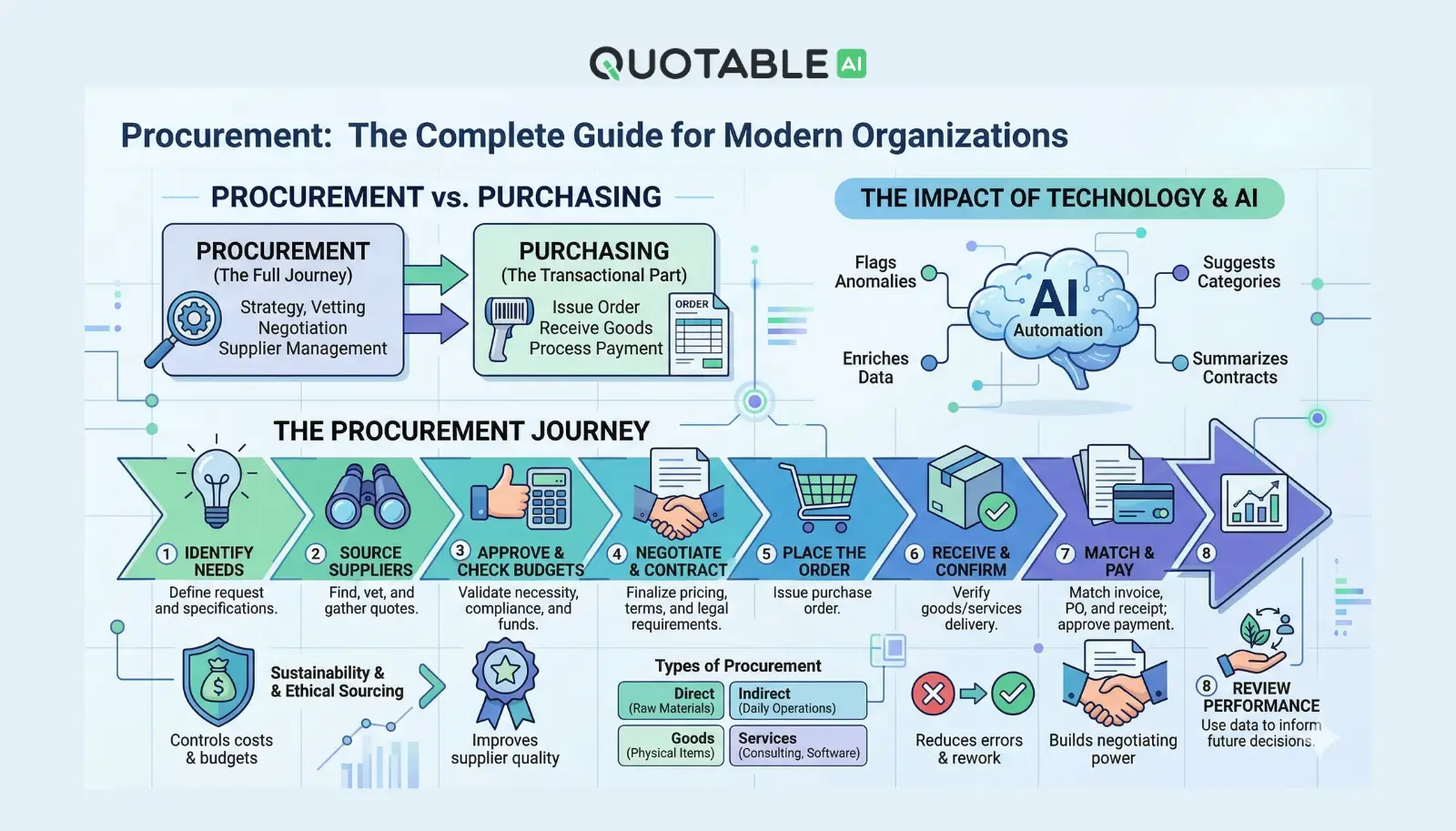
Purchasing is just one part of procurement. Think of purchasing as the execution: placing orders, tracking receipts, and processing invoices. Procurement, on the other hand, is the full journey from identifying a need to ensuring value is delivered.
Why Does Procurement Matter?
A strong procurement process does more than keep the lights on, it keeps surprises and inefficiencies at bay. Here’s why it’s crucial:
- Controls costs and budgets: By setting clear approval workflows and supplier standards, procurement helps you avoid unnecessary or off-contract spending.
- Reduces errors and rework: When procurement is proactive, issues like mismatched invoices or last-minute approvals become rare.
- Improves supplier quality and reliability: Holding suppliers to clear expectations leads to better performance and fewer disruptions.
- Builds negotiating power: Consolidating spend and standardizing suppliers gives you more leverage for better deals.
Procurement’s Role in the Supply Chain
Procurement decisions shape your organization’s flexibility and resilience. The suppliers you choose, the contracts you sign, and the service levels you demand all set the tone for how your supply chain responds to challenges, whether it’s a delayed shipment or a sudden change in demand.
Sustainability and Ethical Sourcing
Modern procurement isn’t just about price. It’s about values. Embedding sustainability, ethical labor, and compliance into supplier selection and contracts ensures your organization meets its standards, and makes reporting and audits far easier.
The Procurement Process: Step by Step
Every organization’s process is unique, but most follow a similar path:
- Identify needs: The journey starts with a clear request, what’s needed, why, and when.
- Source suppliers: Find and vet suppliers, gather request for quotations (RFQs), and ensure they meet your requirements.
- Approve and check budgets: Validate that the request is necessary, compliant, and within budget.
- Negotiate and contract: Finalize pricing, terms, and legal requirements.
- Place the order: Issue a purchase order reflecting all agreed details.
- Receive and confirm: Verify goods or services have been delivered as promised.
- Match invoices and approve payment: Ensure the invoice aligns with the PO and receipt before approving payment.
- Review performance: Use supplier performance data to inform future decisions.
Types of Procurement
Procurement isn’t one-size-fits-all. It’s often broken down into:
- Direct procurement: Materials and services directly tied to your organization’s core products or services.
- Indirect procurement: Everything else that supports daily operations but isn’t part of your end product.
- Goods procurement: Physical items like inventory, equipment, or supplies.
- Services procurement: Labor, consulting, maintenance, or software subscriptions.
Each type comes with its own risks, approval needs, and visibility challenges.
What is Procurement Management?
Procurement management is about running a tight ship, deciding what gets bought, from whom, under what terms, and with the right approvals. It’s about making sure every decision holds up under scrutiny and every dollar spent is accounted for.
Building a Procurement Strategy
A thoughtful procurement strategy sets your organization up for success. Here’s what a strong strategy covers:
- Standardization: Identify which categories and suppliers to standardize first to prevent one-off buys.
- Sourcing rules: Define when to use preferred vendors, when to collect quotes, and when contracts are required.
- Approval workflows: Set clear thresholds and responsibilities for who approves what.
- Supplier management: Establish onboarding, renewal, and performance review processes.
- Measuring success: Track KPIs like compliance rates, cycle times, savings, and supplier performance trends.
Core Procurement Activities
Procurement goes beyond buying. The key activities include:
- Defining needs: Clarify scope, specifications, timing, and budget before a purchase.
- Supplier selection and onboarding: Choose suppliers based on price, quality, risk, and reliability, and make sure all legal and payment requirements are met upfront.
- Negotiation and contracts: Secure favorable pricing, terms, and protections to minimize disputes later.
- Purchase controls: Enforce rules and thresholds to keep spending compliant and efficient.
- Supplier performance: Monitor delivery, quality, and pricing over time, and decide when to renew or change suppliers.
Procurement vs. Purchasing
It’s easy to mix these up, but here’s the difference
- Procurement is the full journey: deciding what to buy, who to buy from, and on what terms.
- Purchasing is the transactional part: issuing orders, receiving goods, and processing payments.
If you’re setting the rules, you’re in procurement. If you’re executing the order, you’re in purchasing.
Procurement and Supply Chain Management
Procurement sits at the front of your supply chain, setting the terms and expectations. Supply chain teams execute those choices, managing inventory, lead times, and day-to-day operations. The two functions feed into each other, especially when it comes to supplier performance and risk management.
The Impact of Technology and AI on Procurement
Technology is transforming procurement from a manual, spreadsheet-driven process to a streamlined, automated workflow. Here’s how:
- Automation: Standardizes intake, approvals, and documentation, reducing errors and exceptions.
- AI: Flags anomalies, suggests categories, enriches data, and summarizes contract details, making it easier to spot issues and focus on what matters most.
- AI Agents: that can execute tasks on behalf of the user, send RFQs, negotiate with suppliers, spend analysis, contract management, create reports, and more.
The result? Less admin, more insight, and better decision-making.
Future Trends in Procurement and AI
Procurement is evolving fast. Key trends include:
- AI moving from insights to action: Automating more of the workflow and executing, not just reporting.
- Supplier risk management: Procurement is now expected to assess and respond to supplier risks, including cyber threats.
- Sustainability and compliance: Gathering and validating supplier data on environmental and labor practices is becoming standard.
- Data quality: Clean, consistent data is the foundation for effective automation and analytics.
- Platform consolidation: Organizations are moving toward integrated, end-to-end procurement platforms for better visibility and control.
Frequently Asked Questions
Q: What is procurement?
A: Procurement is the process of obtaining goods and services for your organization, deciding what to buy, finding suppliers, negotiating deals, and ensuring everything arrives as needed.
Q: Are there different types of procurement?
- Direct procurement: Goods and materials for your core products.
- Indirect procurement: Goods and services for daily operations.
- Services procurement: Consulting, legal, maintenance, and more.
Q: What are the main stages of procurement?
- Identify needs
- Specify requirements
- Find and select suppliers
- Solicit bids or proposals
- Negotiate and award contracts
- Manage orders and delivery
- Review performance and manage relationships
Q: How is procurement different from purchasing?
A: Procurement is the strategic, end-to-end process; purchasing is the transactional, execution phase.
Q: Is procurement part of the finance department?
A: Not directly. Procurement usually operates as its own function but works closely with finance to ensure spending aligns with budgets and goals.
Q: Why is a procurement strategy important?
A: It drives cost savings, manages risk, ensures quality, builds strong supplier relationships, and aligns with business goals.
Key Takeaways
Procurement is about making smart, strategic decisions before any money is spent. When procurement and purchasing work hand-in-hand, you get fewer surprises, less rework, and more value from every dollar spent. If you want to improve procurement, start by identifying the weak links, unclear requirements, too many suppliers, inconsistent approvals, and fix those first. Early improvements in the process pay off downstream.