
Three suppliers send quotes, and the lowest unit price wins the comparison. Then the real bill arrives. Freight, duties, quality control (QC) failures, and admin hours were never on that quote. What looked like the cheapest option on paper may end up costing more than expected.
That's the challenge with low-cost country sourcing, where businesses buy from countries with lower production costs. The potential savings can be significant, but they only pay off when the landed cost holds up after the goods reach your dock.
The quoted price is rarely the price you pay. At the end of the day, landed cost is the only number that truly matters. Model it before you switch countries. Then you can dodge the missed launch windows and reorder quality failures that eat margin after the first shipment.
Main Takeaways
- Low-cost country sourcing picks the lowest production cost, while best cost sourcing weighs logistics, tariffs, quality, and risk alongside unit price.
- Total landed cost adds freight, duties, brokerage, insurance, quality control, carrying cost, and admin overhead to the unit price.
- The best sourcing country depends on your product category, tariff risk, trade agreements, and order volume, not wages alone.
- Reorder quality failures, slow fixes across time zones, and customs detentions are the risks that most often drain margins.
- Low-cost country sourcing is the wrong fit for low volumes, complex or IP-sensitive products, short lead times, or heavily tariffed categories.
Low-Cost Country Sourcing vs. Best Cost Country Sourcing

Low-cost country sourcing (LCCS) picks the option with the lowest production cost. Best cost country sourcing picks the option with the best total value. It weighs logistics, tariffs, quality, and risk next to the unit price. The winner is whichever supplier costs least once the goods reach your warehouse.
Why the Distinction Matters
An LCCS comparison scores suppliers on labor, materials, and factory overhead. A best-cost comparison adds landed cost, lead time, quality steadiness, and supply chain risk. Picture a $2.10 unit from Bangladesh against a $2.80 unit from Mexico. Once duties, freight, and fewer QC failures hit the books, Mexico may come out cheaper.
Plenty of companies have already moved toward that wider view. A 2024 Gartner survey found 73% of companies added or removed production locations between 2022 and 2024. Resilience and agility now outrank pure cost efficiency as the drivers. So most LCCS decisions now happen inside a best-cost frame. You still chase lower costs, but you model total value across the whole order.
Why Companies Source from Low-Cost Countries
Companies source from low-cost countries for three reasons. They want lower unit costs. They need capacity they can't find at home. And they want to be closer to materials or regional markets. Here's a closer look at each reason:
- Lower unit costs. Wage gaps between countries are large and real. The JETRO Asia & Oceania Survey puts 2024 mean monthly manufacturing base pay at $654 in China. India came in at $341, Vietnam at $302, and Bangladesh at $95.
- Production capacity. Many low-cost countries built their factories for export volumes. In apparel, electronics assembly, and consumer goods, domestic suppliers often can't match that scale.
- Market access. Producing in-region can cut last-mile costs and tariff risk when you sell into that region. Vietnam, for example, can serve Association of Southeast Asian Nations (ASEAN) distribution as well as US imports.
Wages are only one input in total product cost, though. A $95 monthly wage stops mattering once minimum order quantities (MOQs), freight, and tariffs swallow the savings. Use labor cost to open the comparison. Let landed cost close it.
These advantages also depend on a few conditions. Your order volume has to be big enough to cover freight and setup costs. Your product needs quality you can control through specs and inspection. And the tariff picture has to stay stable long enough to plan around. Miss one of those, and the savings can disappear.
Cut Procurement Costs Before You Switch Countries
Carrying cost, admin overhead, and QC failures rarely show up in a supplier quote. These five strategies show you where the real money goes and how to stop losing it.
Read the Procurement Cost Guide
How to Calculate Total Landed Cost

Total landed cost (TLC) is what a product really costs after every charge between the factory and your warehouse. It's the only number that tells you whether an LCCS move saves money.
TLC Component Breakdown
The math is simple addition. The hard part is remembering every line:
Unit Price + Freight + Duties & Tariffs + Customs Brokerage + Insurance + Quality Control Costs + Inventory Carrying Cost + Admin Overhead = Total Landed Cost
Take a look at how each line comes into play.
- Unit price: The supplier's free on board (FOB) or ex-works (EXW) quote, and often the only line buyers compare.
- Freight: Ocean or air shipping plus inland transport, often guessed from a stale rate.
- Import duties and tariffs: The rate set by your product's Harmonized Tariff Schedule (HTS) code, easy to misjudge if you guess the classification.
- Customs brokerage and documentation: Broker fees and filing charges that never show up on a supplier quote.
- Cargo insurance: Coverage for loss or damage in transit, often left out of early estimates.
- Quality control: Pre-shipment inspection, sample rounds, and failed-batch costs, which rarely get budgeted up front.
- Inventory carrying cost: Your weighted average cost of capital (WACC) on goods in transit and safety stock, a cost that never appears on an invoice.
- Admin overhead: Hours lost to supplier emails, time zones, travel, and compliance, which nobody bills you for directly.
Carrying cost is the line buyers miss most often, and it adds up fast. U.S. business inventory carrying costs hit about $700 billion in 2023, per the 2024 State of Logistics Report. Longer pipelines lock up more of your cash. Compare a 60-day ocean lead time with a 5-day truck run from Mexico. The ocean route ties up your working capital in inventory for 55 extra days.
Worked Example: How a $3.00 Unit Becomes $5.25
Consider this illustrative example. Say you order 5,000 units of a consumer product from China at $3.00 FOB. Ocean freight adds $0.60 a unit, so you're at $3.60. A 25% duty adds $0.75, bringing you to $4.35. (Many Chinese goods now also pay the 12.5% Section 301 duty from July 2026, so your real number may run higher.) Customs brokerage and insurance add $0.15, for $4.50.
Then come the costs nobody quotes you. QC inspection adds $0.10, which moves you to $4.60. Carrying cost on goods in transit adds $0.20, for $4.80. Admin overhead adds $0.45, and your landed cost reaches $5.25. That "cheap" $3.00 unit costs 75% more than the quote suggested.
Now run a $4.00 unit from Mexico through the same model. With USMCA duty preference and a 5-day truck transit, it might land at $4.60. The higher quote ends up as the lower cost.
Freight rates won't hold still for your model, either. Drewry's World Container Index hit $5,117 per forty-foot equivalent unit (FEU) in June 2024, up 233% year over year, as Seatrade Maritime reported. Red Sea rerouting around Africa can add 10 to 14 days to some voyages, and many carriers still used that route in 2026.
A model built on last quarter's rate can be wrong before your PO ships. So test your TLC against a range of freight rates. Build this model before you switch countries. It turns a gut-feel comparison into a decision you can defend.
Country Comparison by Product Category
Your best low-cost country depends on what you source. It also depends on where you sell and which tariffs and trade agreements cover your product. The country with the lowest wages often loses once you weigh those factors.
Comparison Table for US Importers
The table compares five common sourcing countries on the factors that drive real decisions. You'll see category fit, labor cost, trade agreements, current U.S. tariff risk, and typical MOQs.
| Country | Best-Fit Categories | Monthly Mfg. Wage (2024) | Key Trade Agreements | 2025–2026 U.S. Tariff Exposure | Typical MOQs |
|---|---|---|---|---|---|
| China | Electronics, hardware, complex assemblies | ~$654 | None preferential for U.S. | High: Section 301 rates up to 100% on EVs, 50% on solar, 25% on many goods, plus a 12.5% Section 301 duty on most goods since July 2026 | Low–medium (mature supplier base) |
| Vietnam | Apparel, footwear, furniture, light electronics | ~$302 | CPTPP (not U.S.); U.S.-Vietnam reciprocal trade framework (Oct. 2025) | Moderate: 12.5% Section 301 duty on most goods since July 2026; AD/CVD duties on solar; still lower than China overall | Medium |
| India | Textiles, pharmaceuticals, auto components, IT hardware | ~$341 | U.S. GSP revoked in 2019; U.S.-India interim trade framework announced Feb. 2026 | Moderate: 10% Section 301 duty on most goods since July 2026, plus category-specific duties | Medium–high |
| Mexico | Auto parts, appliances, food/bev, packaging | Higher than Asia (avg. ~$5.10/hr, or ~$884/mo) | USMCA (duty-free for qualifying goods) | Low for USMCA-qualifying goods; MFN plus a 10% Section 301 duty otherwise (since July 2026) | Low (shorter runs viable due to proximity) |
| Bangladesh | Basic apparel, textiles, jute products | ~$95 | No U.S. GSP (suspended 2013; program lapsed 2020); U.S.-Bangladesh Agreement on Reciprocal Trade signed Feb. 2026; LDC preferences in EU | High: steep U.S. MFN duties on apparel, plus the 10% Section 301 duty from July 2026 (USTR plans a tariff-rate quota that would let some textiles and apparel enter free of that duty); UFLPA compliance risk | High |
2025–2026 Tariff Shifts and Nearshoring
Section 301 hikes in 2024 pushed tariffs on Chinese EVs to 100% and on solar cells to 50%. The last battery-related increase took effect on January 1, 2026, per the White House fact sheet. Those hikes target specific categories, so they don't land evenly. A buyer of kitchen tools from China faces different math than an EV battery buyer. Check the rates on your own HTS codes before you trust a headline number.
The bigger 2025 and 2026 shift hit almost every sourcing country. In February 2026, the Supreme Court struck down the IEEPA tariffs, and a temporary 10% Section 122 tariff replaced them. When that expired on July 24, 2026, a new Section 301 duty took over: 12.5% on most goods from China and Vietnam, and 10% on most goods from India and Mexico. Mexican goods that enter duty-free under USMCA are exempt.
Mexico stayed the top U.S. import source in 2024, a spot it first took in 2023. It accounted for 15.5% of U.S. goods imports, against 13.4% for China, per the U.S. Census Bureau. USMCA duty-free treatment explains part of the shift. Truck transit of two to five days and shared time zones explain the rest.
For many categories, that speed and tariff savings beat Asia's lower unit prices. Mexico still isn't cheaper for everything, though. Capacity limits and higher labor costs mean it fits best for auto parts, appliances, packaging, and mid-complexity assemblies.
Low labor cost refers to the wage gap between manufacturing workers in developing economies and workers in higher-cost markets. It's one input in total product cost. On its own, it shouldn't decide your sourcing country, because freight, tariffs, and quality can outweigh it.
Country choice happens one category at a time. Your HTS codes, order volumes, lead-time tolerance, and qualifying trade agreements make the call.
Operational Risks and Common Failure Points

The risks that drain LCCS margins rarely show up in the plan. Quality failures hit on reorders. Contact gaps stall fixes for weeks. And compliance holds freeze your cash at the port.
Quality and Communication Risks
First orders tend to pass because everyone is watching closely. The failures show up on reorders, once attention drifts. Specs that were never locked in writing start to slide. Materials get swapped without notice, and tolerances shift between runs.
Say a reorder of 10,000 units comes in with a 5% defect rate. That leaves you 500 units you can't sell. Then you pay for rework or returns, or you miss your launch window.
Time zones slow every fix. Send a question at 3pm EST, and your Vietnam supplier answers at 9am the next day. That's a one-day delay per exchange. Three rounds on a spec issue can cost you a week.
Language gaps make the delay worse. A "confirmed" email can mean the supplier understood your spec. Sometimes it only means they received it.
Compliance and Geopolitical Risks
Forced-labor enforcement is relentless. Through April 1 of FY2025, CBP stopped 5,831 shipments under UFLPA, per its COAC Forced Labor Issue Paper. Those shipments carried $75.3 million in goods. The risk varies a lot by category. Automotive and aerospace made up 89.13% of stopped shipments. Consumer products were 6%, and apparel, footwear, and textiles were 3.8%.
A detention delays delivery and freezes the cash you already paid for the goods. It can force you into emergency re-sourcing. And if you can't prove supply chain traceability, customers may cancel.
Trade policy can also change mid-order. A new tariff, export restriction, or sanction can raise your landed cost after you've placed the PO. The goods may not have shipped yet. That's why your TLC model needs tariff scenarios alongside today's rate.
These risks stack. One order can hit a quality failure, a slow fix, and a compliance hold. That mix can turn a profitable SKU into a write-off.
Supplier Vetting and Quality Control Checklist
Good supplier vetting does three jobs before your first purchase order. It screens out trading companies, confirms the factory can do the work, and puts QC checkpoints in writing. Skip it, and procurement turns into a crisis that repeats every order.
Manufacturer vs. Trading Company Identification
A trading company sits between you and the real factory. It takes your order, places it with a manufacturer, and adds its own margin. That trading company markup adds nothing on the production line. You'll find many of these middlemen in China and Vietnam. These red flags usually mean you've found one:
- The supplier quotes across unrelated product categories.
- They can't send factory photos or video when you ask.
- The business license address doesn't match the factory address.
- They resist factory visits or third-party audits.
Audit Criteria and Sample Protocol
A factory audit, in person or through a third party, should confirm these basics:
- Production capacity measured against your order size
- Equipment condition and age
- Existing certifications, such as ISO or BSCI
- Workforce size and working conditions
- Raw material sourcing records for UFLPA compliance
A factory that welcomes a third-party audit is sending you a good signal. Reluctance should take it off your list.
Samples come next. Ask for a pre-production sample before you sign the PO. Then pull a production sample from the actual run, instead of a hand-picked showpiece. Check both against your spec sheet.
Many buyers skip the production sample to save time. That shortcut causes more reorder quality failures than any other.
QC Checkpoints Across the Order Lifecycle
Quality control runs across the whole order. Check materials before production starts. Inspect inline when production is 30% to 40% complete. Run a final inspection before shipment, then a receiving inspection at your warehouse. Managing these checkpoints takes time and coordination, especially without a dedicated procurement team.
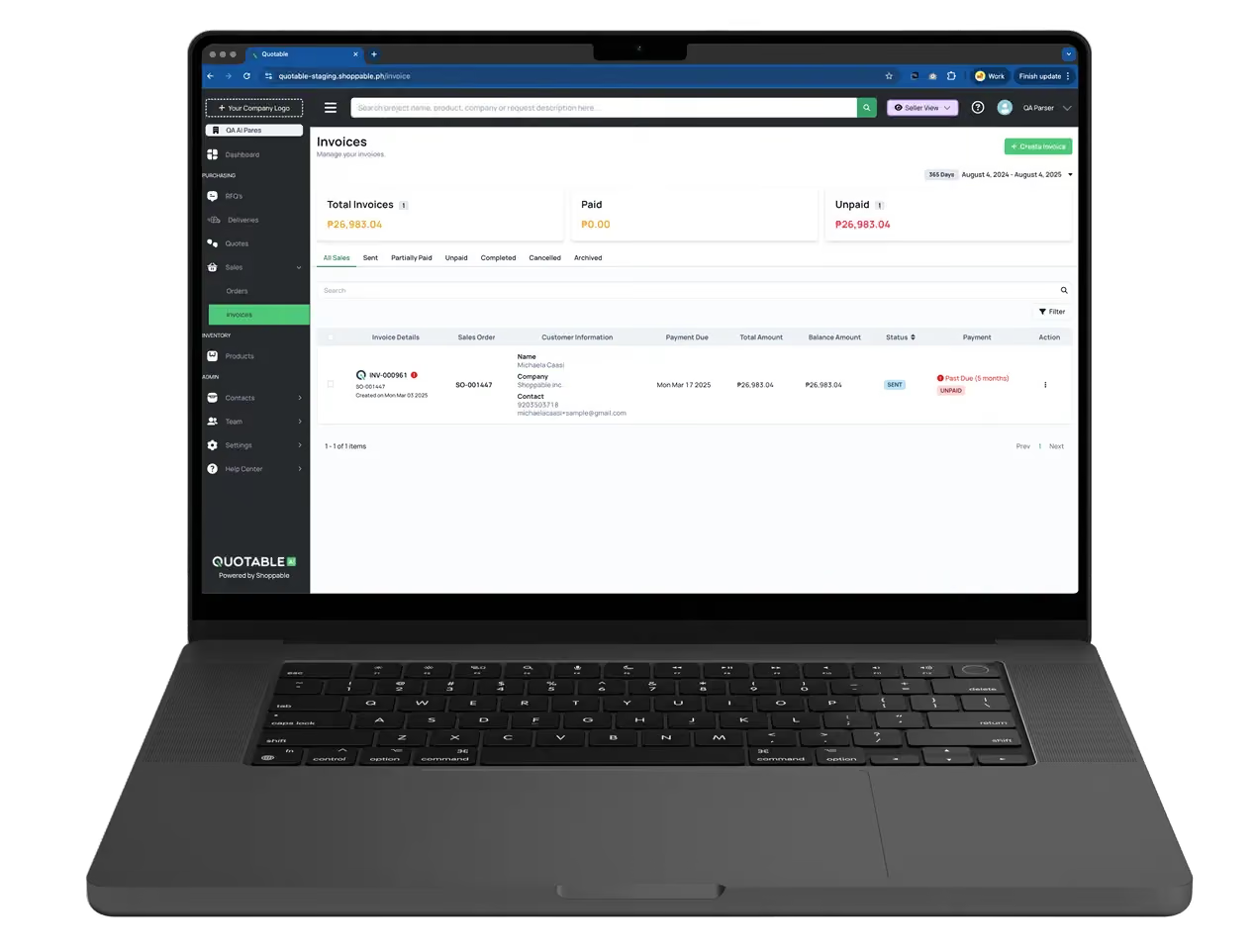
At Quotable AI, our AI-powered managed procurement service, Quotable Concierge, helps importers handle that workload through supplier sourcing, RFQ comparison, and QC coordination. Without someone overseeing these tasks, the administrative costs in your TLC model can quickly add up.
Vetting happens once. The checkpoints repeat on every order, and they keep quality steady from your first purchase order (PO) to your fifth reorder.
Compare Every Supplier Quote on Real Landed Cost
Fragmented sourcing workflows hide the cost differences that matter most. See how mid-market teams centralize RFQs, approvals, and spend visibility in one place.
Explore Mid-Market Procurement Software
When Low-Cost Country Sourcing Is the Wrong Strategy
LCCS is the wrong move in three situations. One, when your volumes can't absorb the fixed costs. Two, when your product is too complex or IP-sensitive to build remotely. And three, when your offshore transit breaks your lead times. Here's a simple way to see if you fall into any of the three.
Decision Framework: Five Disqualifiers
Run your product through these five checks before you chase a lower quote:
- Your order volume is too low. Small orders can't spread freight, customs, and admin overhead across enough units. If your MOQs can't justify those costs, domestic or nearshore sourcing lands cheaper.
- Your product is highly complex. Tight tolerances, frequent engineering changes, and iterative prototyping are hard to manage across time zones and languages. The contact cost alone can exceed your unit-price savings.
- Your IP is highly sensitive. When your value sits in proprietary design, formulation, or tooling, weak IP enforcement can outweigh any cost advantage. This hits electronics, medical devices, and specialty chemicals hardest.
- Your lead times are short. A 45- to 60-day ocean pipeline can't support two-week replenishment. Nearshoring to Mexico or sourcing domestically keeps you responsive.
- Your category carries heavy tariffs. If your HTS code sits under steep Section 301 rates, the duty alone can sink the deal. Run the TLC model first, and walk away if duties exceed your unit-price savings.
Failing a check points you toward a different model. Nearshoring to Mexico or Central America suits many U.S. importers. Domestic sourcing fits low-volume or high-complexity products. Best cost country sourcing works when you need to balance cost against resilience and speed.
You rarely have to pick just one. Many companies use LCCS for high-volume commodity SKUs and source complex or time-sensitive products closer to home. We help buyers compare supplier quotes side by side so they can run this disqualification math before a country switch.
Start every LCCS decision with this check. If any trigger applies, passing on the cheapest unit price will save you more.
Put Your Landed Cost Model to Work with Quotable AI

You can now weigh sourcing countries on what goods cost at your dock. That beats the number a supplier writes on a quote. It lets you decide whether low-cost country sourcing earns a place in your supply chain before you sign anything.
We built Quotable Concierge, our AI-powered managed procurement service, for importers who run this review without a dedicated procurement team. Our AI structures every supplier quote so you can compare them side by side, and our team helps you weigh landed cost before you agree to anything. Vetting happens up front, which helps your reorders hold the quality of your first order.
Every RFQ, quote, purchase order, and payment lives in your account. Contacts, documents, price history, and performance records stay there, too. See how Quotable Concierge, our AI-powered procurement outsourcing service, handles supplier vetting, RFQ comparison, and QC coordination today.
Run Supplier Vetting Without a Procurement Team
When you're sourcing across time zones without dedicated procurement staff, every reorder is a risk. Get supplier vetting, RFQ comparison, and QC coordination handled for you.
Talk to an Expert
FAQs About Low-Cost Country Sourcing
How do I know if my landed cost model is accurate enough to trust?
Compare your model to actuals from a first or pilot shipment. Check each cost line for variance. That means freight, duty classification, QC failures, and admin time. Modeled and actual landed cost may differ by more than a few points. If so, fix the input that drifted before you scale volume. Then re-run the model with a freight and tariff range to see your risk.
How many sample rounds should I run before placing a full order?
Plan on two sample rounds at minimum. First, a pre-production sample confirms the spec. Second, a production sample comes from the actual run. Add a third round for tight tolerances, new materials, or a factory you haven't used before. Spec changes, failed tolerances, and material swaps also call for an extra round. Build that time into your launch schedule up front.
What should I do if a supplier's first shipment fails inspection?
Hold the shipment and log the defects against your written spec. Use photos and inspection data. Then choose between rework, partial intake with a price change, or rejection. Make that call before you release any remaining payment. Your payment terms and QC clauses, set before production, decide how much leverage you have. Feed the failure into your landed cost model, then decide whether this supplier gets a second chance.
Should I source from one country or split orders across two?
Split orders when one country could stall your sales. A tariff change, port delay, or compliance hold can do that. Stay with one country when your volumes are too low to meet MOQs at two suppliers. Splitting adds vetting, QC, and admin overhead, so run it through your landed cost model first. A common setup is a primary country for volume and a smaller nearshore backup.
Do I need a dedicated procurement person to run low-cost country sourcing?
Not necessarily. But someone has to own supplier vetting, RFQ comparison, sample rounds, and QC follow-up across time zones. Many small teams use a part-time owner. They add a managed procurement service or a tool that pools quotes, POs, and payments. The recurring workload is supplier follow-up and reorder QC, not the one-time country decision. Outside support fits repeatable order volume better than one-off, low-volume buys.