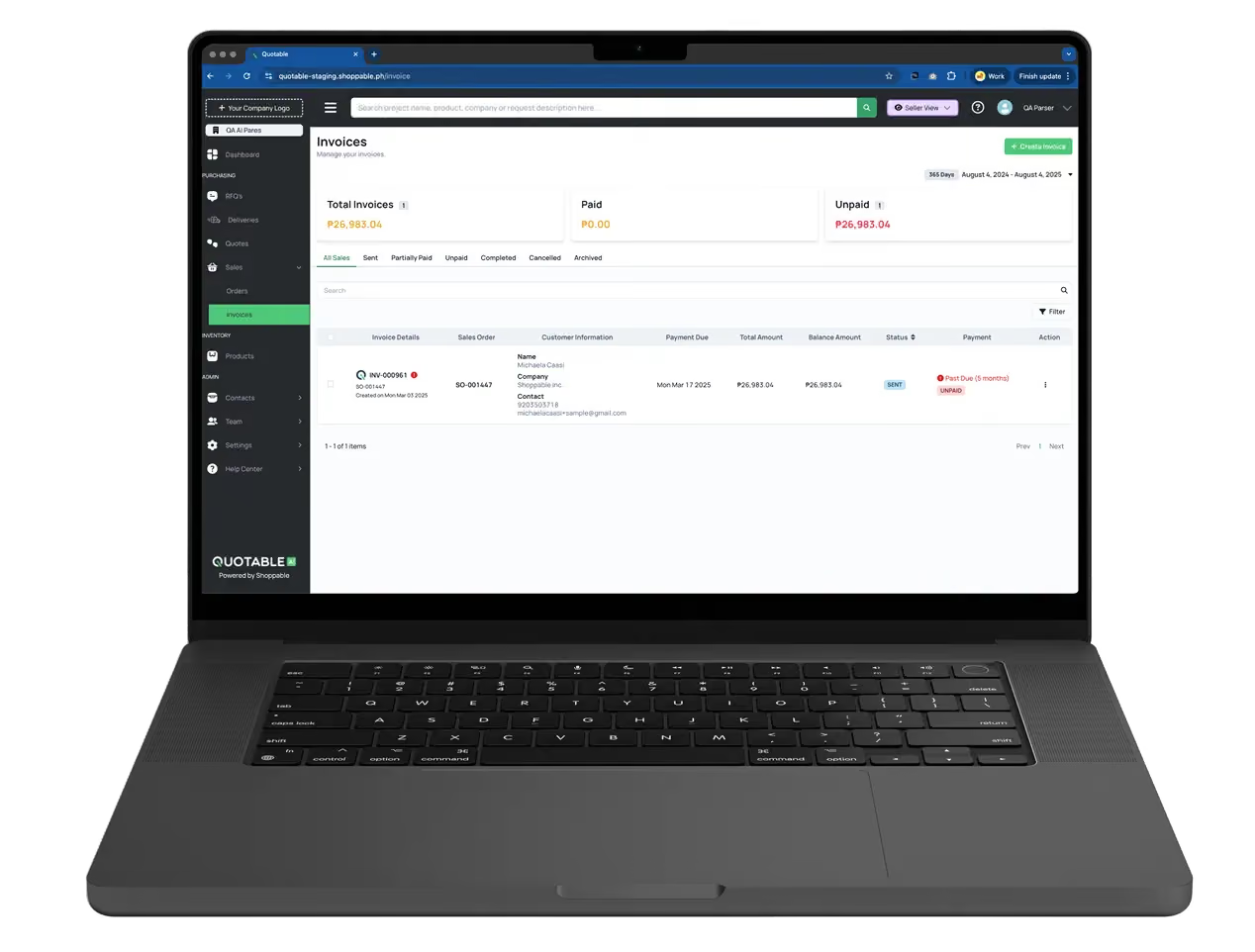
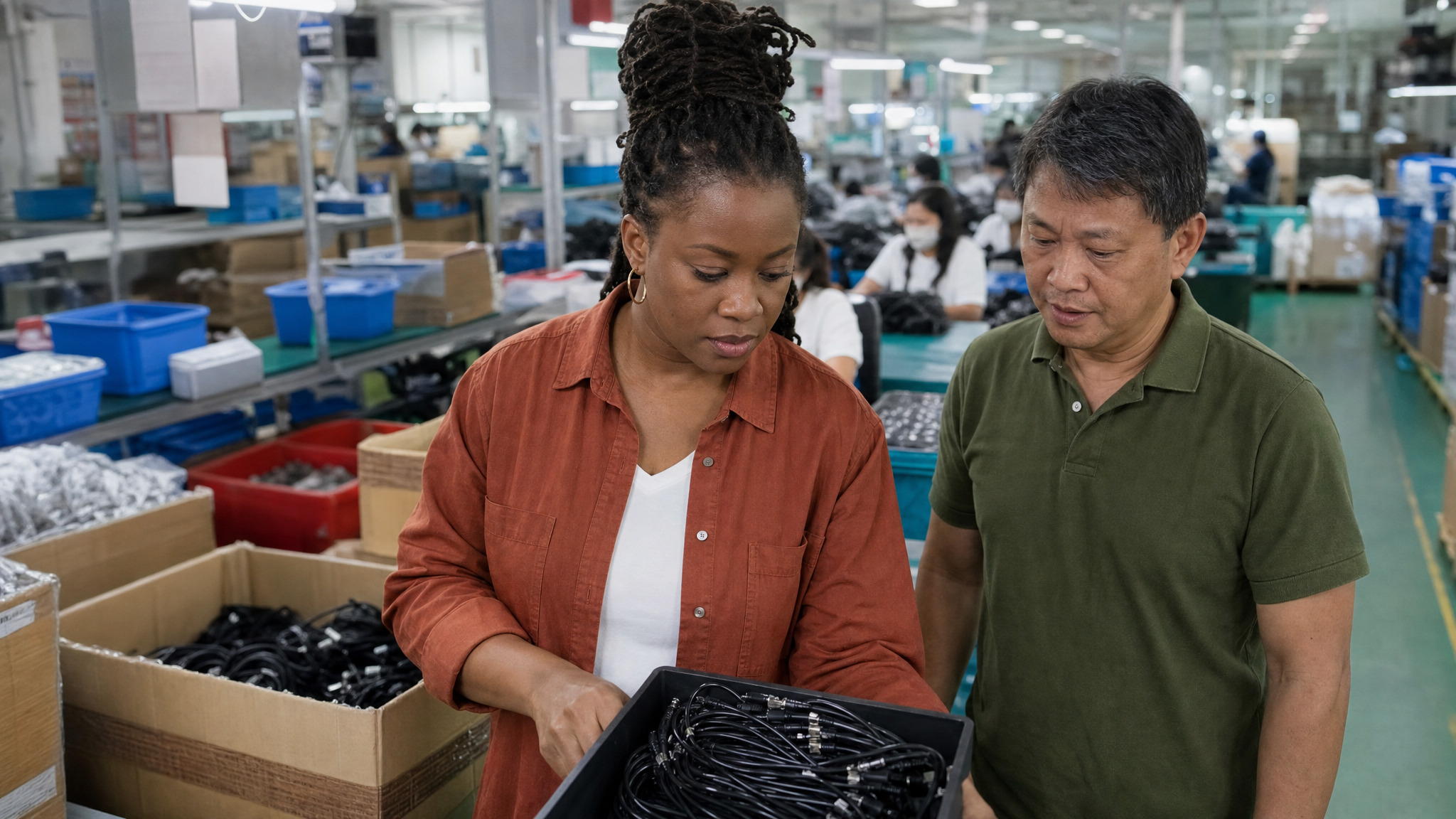
The catalog looks polished. The contact answers fast, in clean English. So you assume you're talking to a factory. Plenty of the time, you're talking to a trading company, and the quote quietly carries someone else's markup. You may never know who's actually making the product you're buying.
Sourcing from Philippine manufacturers starts with recognizing the factory from the reseller. Sector fit, industrial zone signals, and payment terms all hinge on that answer.
The Philippines is a credible source for specific types of goods. But minimum order quantity (MOQ) realities and payment steps sink unvetted first orders. Before you commit to production, it's wise to vet a real factory, set your payment terms, and plan for foreign exchange (FX) costs.
Main Takeaways
- Philippine manufacturers are strongest in electronics and semiconductors, food and beverage, automotive components, furniture, and garments. Electronics leads by a wide margin.
- Electronics orders usually suit mid-to-large buyers. Food co-packers and furniture makers can often take smaller first runs.
- China or Vietnam often serve commodity volume, full vertical supply chains, and large-scale garments better. Shortlist the Philippines for electronics, food ingredients, specialty work, or tariff reasons.
- Before issuing a purchase order, confirm SEC manufacturing registration, a PEZA certificate, a live factory walkthrough, and a bill of materials. These checks separate factories from trading companies.
- Start with a first order at one to two times MOQ. Use a 30/70 payment split, an inspection checkpoint, and a two-to-four-week lead time buffer.
What the Philippines Manufactures Best

Philippine manufacturers are strongest in five sectors. These are electronics and semiconductors, food and beverage processing, automotive components, furniture, and garments. Electronics lead by a wide margin. The sector made up more than half of the country's total goods exports in 2024, per the Philippine Statistics Authority.
Electronics and Semiconductors
Electronics anchor Philippines manufacturing. The sector exported $39.09B in 2024. The Philippine Statistics Authority puts that at 53.4% of goods exports. Industry figures from SEIPI put that share at 58.81% in 2025.
Four groups give sourcing buyers the most to work with:
- Electronic manufacturing services (EMS) providers assemble to your specs.
- Semiconductor plants handle packaging and testing.
- Passive component makers produce parts like multilayer ceramic capacitors (MLCCs).
- Wiring harness assemblers produce cable and wiring assemblies.
This is the deepest supplier pool in the country. It also has the best export-ready setup. The catch is order size. Minimum order quantity (MOQ) and tech specs here usually suit mid-to-large orders.
Food and Beverage, Automotive, Furniture, and Garments
Outside electronics, food and beverage processing shows the steadiest growth. A 2026 USDA Foreign Agricultural Service Report expects 5% sales growth in 2026. Good picks include snack foods, confectionery, dried fruit, and coconut-based ingredients. Many plants also co-pack for private label.
Automotive components are a narrower fit. Suppliers of wiring harnesses and stamped metal parts gain from Japanese Original Equipment Manufacturer (OEM) presence. They also gain from the zone setup already in place.
Furniture and garments still export, though at smaller scale. Both work best for buyers who need specialty or short-run production. Commodity volume is a harder ask in either one.
Sector-by-Sector Sourcing Comparison
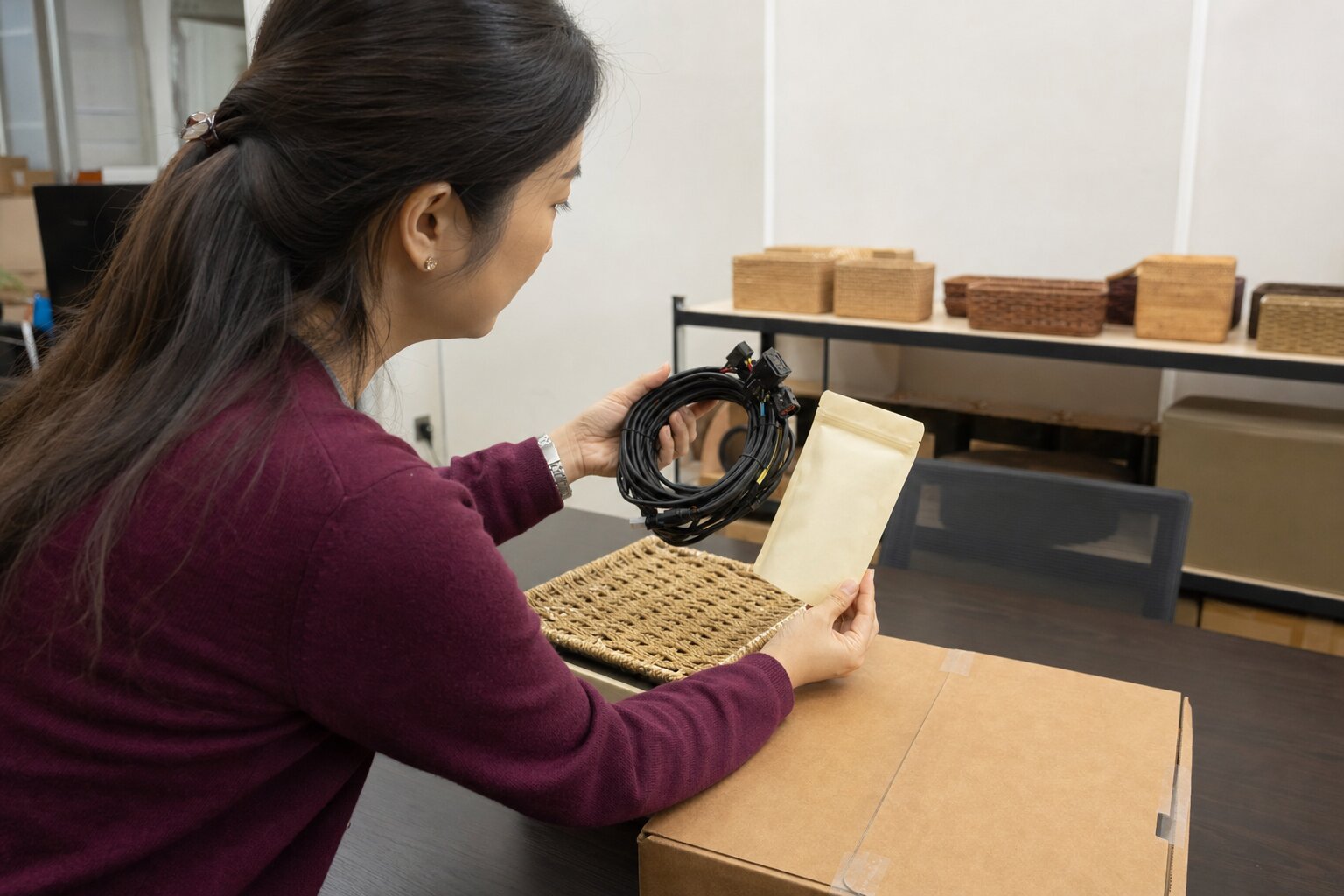
This table is your shortlisting tool for Philippines sourcing. Each row maps a sector to the companies that anchor it. It also shows where its factories cluster. You'll see the order scale to expect, too. The last column shows how the sector stacks up against China or Vietnam.
Read the last column as a blend of supplier depth, price standing, and export setup. No single metric decides it. Treat the buyer-scale column as a guide, too, since it shows what you'd typically expect.
Sector-by-Sector Sourcing ComparisonSectorKey CompaniesZone ConcentrationTypical Buyer Scalevs. China/VietnamElectronics / SemiconductorsIMI, various PEZA-registered EMSFPIP, CPIP, Cavite Economic ZoneMid-to-large (high MOQs)Strong for semis/EMS; weaker for finished consumer electronicsFood & BeverageSan Miguel, URC, Monde NissinCALABARZON, CebuSMB-open (lower MOQs for co-packing)Strong for tropical/coconut ingredients; weaker for commodity grain processingAutomotive ComponentsWiring harness / stamped parts suppliersLaguna, Batangas zonesMid (OEM-tier MOQs)Niche fit; not a substitute for China's full auto supply chainFurnitureExport-oriented SMEsCebu, PampangaSmall-to-mid (custom runs viable)Strong on hardwood/rattan craftsmanship; weaker on flat-pack volumeGarmentsCMT factoriesMetro Manila, CebuSmall-to-midWeaker than Vietnam/Bangladesh on volume; viable for specialty or short runs
Find your row first. If it shows SMB-open scale and strong standing, the Philippines belongs on your shortlist for a first order. A "weaker" rating usually means China or Vietnam will serve that product better. You might still choose the Philippines for a specific reason. Tariff avoidance, English-language paperwork, and specialty specs are the common ones.
Know What Cross-Border Payments Actually Cost You
Hidden FX margins on USD-to-PHP wires compound across every order. This guide breaks down how to read your real landed cost before you wire a deposit.
Read the Cross-Border Payments Guide
Top Philippine Manufacturing Companies
The top Philippine manufacturers sit in two camps: big food and beverage groups and electronics contract manufacturers. Each one anchors its sector. Each also sets the bar you'll measure smaller suppliers against.
San Miguel Corporation: San Miguel reported ₱1.6T in 2024 revenue, per San Miguel. It spans beverages, food, packaging, fuel and oil, power, and infrastructure. Much of that revenue comes from outside food, but its food and beverage arm still sets a high bar for scale. Buyers rarely source from it directly.
Universal Robina Corporation (URC): URC posted ₱161.9B in 2024 sales, per URC. Its business covers snacks, beverages, and branded consumer food. That scale shows how far Philippine food manufacturing reaches beyond commodities.
Monde Nissin: Monde Nissin booked ₱83.1B in 2024 consolidated revenue, per Monde Nissin. It makes instant noodles, biscuits, and the Lucky Me! brand. The company shows how deep the country's snack and noodle manufacturing runs.
Integrated Micro-Electronics Inc. (IMI): Ayala-led IMI earned about US$996M in 2025 revenue, per IMI. It provides EMS for automotive and industrial clients, plus power module packaging. It works as a contract manufacturer. That makes it the most useful name for electronics buyers.
Unless your orders run large, these firms probably won't supply you directly. What they prove is depth. A sector anchored by a ₱100B+ company has Tier 2 and Tier 3 suppliers around it. That's where your order may fit.
Put these names to work during vetting. Ask any manufacturing company in the Philippines which OEMs or brands it supplies. Then cross-check what it tells you.
Where Philippines Factories Are: Industrial Zones and Hubs

Most export-focused Philippines factories operate inside PEZA-registered (Philippine Economic Zone Authority) economic zones. A factory's zone hints at what it makes. It also hints at how ready it is to export. And it shows how your freight reaches port.
CALABARZON: FPIP, CPIP, and Laguna–Batangas Zones
Location is a useful clue when evaluating Philippine manufacturers. For electronics, automotive parts, and light manufacturing, two industrial zones in the CALABARZON region matter most to buyers. First Philippine Industrial Park (FPIP) sits in Batangas, while Calamba Premiere International Park (CPIP) sits in Laguna.
Beyond location, registration status can tell you more about a potential supplier. A PEZA registration tells you the factory is export-focused and works under customs control. It also earns the factory tax breaks under the CREATE MORE Act (RA 12066). That law took effect in November 2024, per Grant Thornton Philippines.
Proximity to shipping infrastructure matters, too. Port capacity and inland transport distances can shape your freight costs. Manila's Manila International Container Terminal (MICT) handled a record 3.0M twenty-foot equivalent units (TEUs) in 2025, per ICTSI. A new South Luzon Container Terminal in Batangas aims for 800k TEU of starting room by 2028, per ICTSI. Once it opens, it could shorten drayage distances for some shipments from nearby industrial zones.
Clark, Subic, Cebu, and Other Zones
Clark and Subic in Central Luzon are former military bases turned freeport zones. They draw aerospace MRO, electronics, and logistics operations. Clark International Airport gives you solid air freight access.
Cebu clusters furniture, garments, and food processing. Its port handles direct container shipping. You can route around Manila congestion.
Use zone status as your first-pass filter. A PEZA-registered factory in an export zone is more likely to have customs bonding and quality proof. It's also more likely to have filled international orders before.
Philippines vs. China and Vietnam: Where It Fits Your Sourcing Strategy
Philippines manufacturing works best as a specialist market inside a China+1 strategy. It's strongest in electronics and EMS, food ingredients, and specialty work. English contact, PEZA zone rules, and tariff standing give it a built-in edge too. English runs through factory management and paperwork teams. That cuts RFQ friction, spec mix-ups, and contract confusion. It's a practical edge over Vietnam and most Chinese suppliers outside Tier 1 cities.
The zones and trade policy add more. PEZA zones offer customs bonding, value-added tax (VAT) perks, and smoother export steps. These ease the legal work for first-time buyers. U.S. tariff policy also tilts some product types toward Philippine origin.
Labor costs help as well. Factory wages sit below China's coastal centers. They also compete with Vietnam's, especially for skilled electronics and food-processing roles. That edge narrows in power-hungry product types.
China still leads on breadth, component supply chains, and volume. For most finished consumer goods, heavy industrial products, and commodities, it remains unmatched. Vietnam has stronger garment and footwear output at scale. Its Free Trade Agreement (FTA) network, including CPTPP and EVFTA, opens lower-rate access the Philippines can't match.
Cost structure can work against you, too. Industrial electricity runs pricey in the Philippines. Many factories also rely on imported inputs. Both can erode price edges in power-hungry or raw-material-heavy product types.
The Philippines is a strong China option for electronics and EMS, food ingredients, and specialty manufacturing. It also cuts tariff risk. In 2024, the U.S. raised Section 301 duties on Chinese EVs to 100%, per U.S. Commerce. Duties on non-EV lithium-ion batteries rise to 25% in 2026. Philippines-origin goods avoid these surcharges in fit product types.
That edge is smaller than it was, though. Since July 24, 2026, most Philippine goods pay a new 12.5% Section 301 duty, per CBP. Vietnam and Thailand pay the same 12.5% rate. Chinese goods pay that same 12.5% on top of China's older Section 301 rates. Semiconductors are exempt from the new duty, per CBP.
Shortlist the Philippines when English-language paperwork matters to you. Do the same when cutting China-origin tariffs is a priority. Look elsewhere for commodity volume or full vertical supply chains. The same goes where supplier depth is thin, such as heavy machinery or textiles at scale.
How to Find and Vet a Real Factory in the Philippines

Finding a factory in the Philippines takes little effort. Confirming you've reached the factory itself takes a set workflow. A trading company can't add markup if you catch it first. You'll need document requests and checks before any first order.
Where to Find Suppliers
Two sources give you the strongest signal on export-ready manufacturers. Start with PEZA's online locator directory. Then try the Philippine Exporters Confederation (PHILEXPORT).
Trade shows and B2B platforms like Shoppable Business widen your list. Manila FAME covers furniture and home goods. SEIPI events cover electronics. Global platforms like Alibaba and GlobalSources show more names. Every lead from these channels still needs checking.
Your candidate pool is growing. PEZA investment approvals reached a record of about ₱261B in 2025, per Philstar. That points to more zone-registered, export-focused suppliers coming online.
Factory vs. Trading Company: The Vetting Checklist
To vet a Philippine manufacturer, run four checks before you issue a PO. First, confirm its SEC registration lists manufacturing as the business type. Sole proprietorships register with the DTI instead of the SEC, so check there if the factory is owner-run.
Second, ask for its PEZA Certificate of Registration. Third, get timestamped factory photos or a live video walkthrough of the production floor. Fourth, request a bill of materials (BOM). It should show which components the factory makes in-house and which it imports.
Each check catches resellers in its own way. Trading companies register with the SEC under a different business type. They seldom hold PEZA certificates, since those go to firms inside controlled zones with customs bonding. Ask for a walkthrough and they'll deflect or send generic facility images. The BOM question stumps them because only a real factory knows its own sourcing.
Next, gather the paperwork that shows the business operates legally and exports. Request a Mayor's Permit and BIR registration. Also ask for proof for your product type, such as FDA for food or ISO for electronics. A sample invoice from a past export shipment rounds out the file. Quotable Concierge, our AI-powered procurement outsourcing service, can help run this vetting for you. Our AI handles RFQs and document checks, and our team makes the sourcing calls.
Keep the first order small. A trial run at one to two times MOQ, with clear quality specs, caps your risk. Add an inspection checkpoint before final shipment. That way you can judge the factory's actual output.
Run RFQs and Supplier Checks in One Place
Vetting Philippine factories means juggling documents, quotes, and payment terms across separate tools. See how procurement teams manage all of it in a single workflow.
Explore Quotation Software for Manufacturers
MOQs, Lead Times, Payments, and Other Sourcing Realities
Three things belong in your cost math before the first PO. The first is sector MOQ floors. The second is lead times tied to imported inputs. The third is payment steps. Payments left unstructured can quietly drain your landed cost.
Order Scale and Lead Time Realities
MOQs swing widely by sector. Electronics and EMS orders usually start at mid-volume minimums, because component buying cycles set the floor. Food co-packers and furniture makers can often take smaller first runs.
Your lead time depends on parts arriving from abroad. Raw materials and mid-stage goods made up 36.4% of Philippine imports in 2024, per the Philippine Statistics Authority. Electronics imports alone were 21.5%. So many factories plan production around global component supply.
Add a buffer of two to four weeks beyond any quoted timeline, especially in Q4 and Q1. Conditions can turn in a month. The Philippine manufacturing PMI dropped from 54.9 in August 2026 to 49.6 in September, per Philstar. High oil prices, strong foreign competition, and weak demand drove the slide.
Cross-Border Payments and FX Costs
Most first orders from Philippine manufacturers follow a 30/70 structure. You wire a 30% deposit when the factory confirms your purchase order (PO). You pay the 70% balance against shipping documents or after a pre-shipment inspection passes. As the tie matures, some buyers move to open-account or letter of credit terms.
The conversion itself deserves a close look. Traditional bank wires add a hidden margin above the mid-market rate on USD-to-PHP conversions. You'll never see that margin on an invoice. Across several payments, it compounds and eats into your landed cost.
Confirm the invoicing currency up front. USD is standard for exports, though some factories quote in PHP. Paying in the factory's preferred currency and handling conversion yourself gives you more control, so lock your conversion timing early. Quotable Payments sends vendor payments fully online, and transfers arrive instantly or by next day, depending on the currency. You also get a real-time rate with no hidden spread, so you can compare it against your bank.
Start Sourcing from Philippine Manufacturers with Quotable AI

You can now match your product type to the right Philippine sector and tell a real factory from a reseller. You also know how to set payment terms before production starts. That puts your first order much closer to the cost you planned.
First orders usually break in two places: supplier vetting and cross-border payment. We built Quotable AI to handle both. Quotable Concierge, our AI-powered procurement service, helps you vet suppliers so you can spot a reseller before you order. Quotable Payments lets you pay vendors fully online, and transfers arrive instantly or by next day, depending on the currency.
If you're still evaluating, see how we handle procurement outsourcing and international vendor payments for buyers sourcing from the Philippines.
Pay Your Philippine Suppliers Fully Online
When your 30% deposit goes out, speed and rate both matter. Quotable Payments sends vendor payments fully online, and transfers arrive instantly or by next day, depending on the currency. You also get a real-time rate with no hidden spread, so you can compare it against your bank.
Request Access
FAQs About Philippine Manufacturers
How do I know if a Philippine factory can handle my order size?
Ask for the factory's current monthly output in your product type. Also ask for a reference from a buyer with a similar order size. Request a redacted invoice or shipping record from a recent export order of like volume. Then check whether your order would take up a real share of their line. Be wary of any factory that says yes to any volume. Watch for the ones that never ask about specs, timelines, or raw material supply.
What should I check before wiring a deposit to a Philippine supplier?
Confirm the beneficiary account name matches the registered company name on the supplier's SEC or PEZA documents. Verify the bank details through a second channel. A call to a number you found on your own works well. Mismatched account names and last-minute bank detail changes are the most common red flags. Pair the deposit with a signed PO or proforma invoice. It should spell out specs, timeline, and inspection rights.
What should I inspect before a first order ships from the Philippines?
Run a pre-shipment inspection on the finished batch, ideally through a third-party inspector. Cover quantity, spec match, packaging, and labeling. Tie the inspection to your balance payment so the 70% releases only after approval. Agree in the PO on the inspection standard. Also agree on what happens if the batch fails.
How do I confirm the real cost of a quote once FX and logistics are included?
Build a landed-cost comparison. Start with the quoted unit price. Add the converted payment amount at the actual rate you receive. Then add wire and bank fees, freight, duties, and any inspection costs. Compare your bank's quoted rate against live rates from a few other providers. That shows you the margin hidden in your bank's rate. Run the same math for two or three suppliers. That way you compare landed cost, not ex-factory price.
How do I ship a first Philippine order if my supplier doesn't export often?
Ask whether the supplier ships free on board (FOB) or ex-works (EXW) and who books freight. Then bring in a freight forwarder early. Settle documents, incoterms, and payment timing before production starts. Smaller factories may need help with export paperwork. Agree on who prepares the commercial invoice and packing list. Your supplier doesn't need an account on our platform to receive payment, so vendor-side adoption won't block the order.