For most small and mid-market businesses paying recurring Philippine supplier invoices, the best route is a regulated cross-border payment platform that shows the exchange rate, fees, and expected recipient amount before approval, then uses a supported local payout route where available. A bank wire still makes sense when the supplier requires USD, the corridor is unsupported, or the transaction needs bank-led trade documentation.
The real decision is not simply “bank or fintech.” It is whether the payment route fits the invoice value, settlement currency, deadline, and records your finance team needs to keep. A low transfer fee can still be expensive if the foreign exchange (FX) spread is hidden inside the quoted rate.
This guide explains how to compare routes for Philippine B2B invoices, when InstaPay or PESONet may appear in the last mile, and how to keep each supplier payment connected to the purchase order or invoice behind it.
Main Takeaways
- Compare the total landed cost, not the transfer fee. Include the FX spread, intermediary deductions, receiving charges, and any difference between the amount sent and the amount the supplier receives.
- InstaPay and PESONet are Philippine domestic rails. An international payment provider may use one of them for the local payout leg, but they do not replace the cross-border leg by themselves.
- InstaPay is designed for smaller, near-instant PHP transfers. The BSP states a maximum of PHP 50,000 per transaction. PESONet supports larger transfers and same-day availability on banking days, subject to the participating institution’s cut-off.
- Paying in PHP can give the supplier certainty. Paying in USD can be appropriate when the invoice is denominated in USD and the supplier has a suitable USD account.
- The payment record matters as much as the rail. Keep the approved invoice, recipient details, exchange-rate review, fees, and payment confirmation together.
Compare the Route Before You Approve the Payment
Quotable Payments lets eligible businesses review the currency, route, rate, fees, and estimated recipient amount before submitting an approved supplier payment.
Explore International Vendor Payments
How an International B2B Payment Reaches a Philippine Supplier
Philippine payment infrastructure is becoming more digital, but business payments still lag consumer payments. The Bangko Sentral ng Pilipinas (BSP) 2025 Report on E-Payments Measurement found that digital channels accounted for 64.69% of retail payment volume in 2025. Business-to-business supplier payments represented 3.67% of electronic transactions, while only 18.75% of business-related payment volume was digital.
That gap explains why the experience can feel uneven. A supplier may bank with an institution that supports fast domestic crediting, while the overseas payer still starts with a traditional SWIFT wire. The payment therefore has two parts: the cross-border movement of funds and the final domestic credit to the supplier.
The best providers make both parts clear. They tell you which currency the supplier will receive, whether the route is local or international, what the payment should cost, and when the funds are expected to arrive. If the route changes, the final quote should change before you approve it—not after the supplier receives less than the invoice amount.
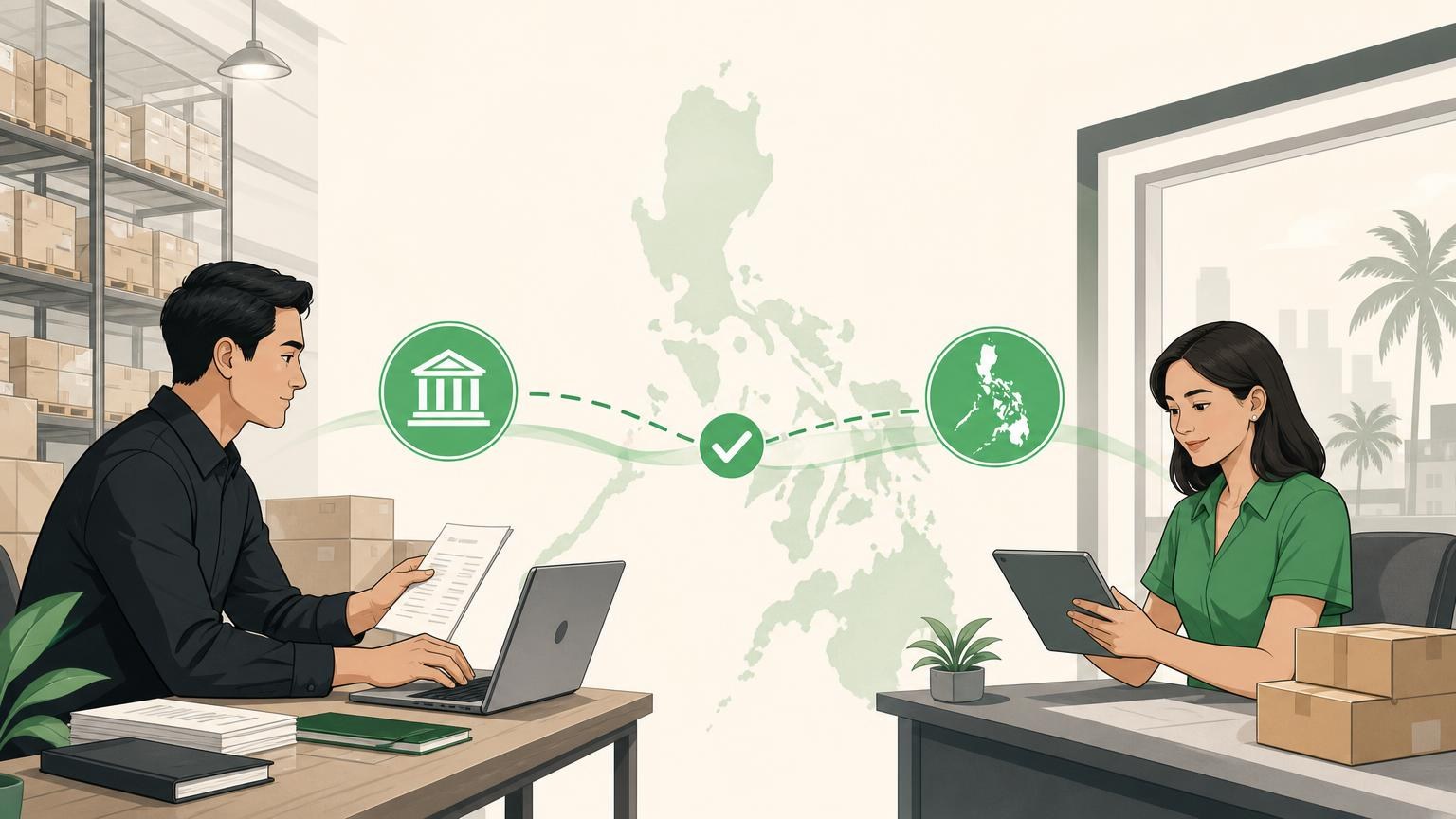
A payment sent from the United States, Europe, or another Asian market cannot enter InstaPay or PESONet directly from abroad. The provider first handles the cross-border leg, including funding, compliance checks, and any currency conversion. A Philippine participating institution can then credit the supplier through an appropriate domestic route.
InstaPay for Smaller, Time-Sensitive PHP Payments
InstaPay is a real-time Philippine electronic fund transfer service. According to the BSP InstaPay FAQ, transfers are available almost immediately, 24 hours a day, and are capped at PHP 50,000 per transaction. A participating bank or e-money issuer may apply its own daily limits and sending fees.
That makes InstaPay useful for smaller deposits, urgent balance payments, or invoices below the per-transaction limit. It is usually not the best fit for a large commercial invoice because splitting one obligation across many transfers adds operational work and can complicate reconciliation.
PESONet for Larger PHP Supplier Payments
PESONet supports larger electronic transfers without the PHP 50,000 InstaPay cap. Funds are generally available on the same banking day when submitted before the participating institution’s cut-off. Transfers initiated after cut-off, on weekends, or on holidays may move on the next banking day.
The BSP reported that PESONet’s multiple-batch settlement upgrade improved same-day clearing in 2025. PESONet transaction value reached PHP 13.19 trillion that year, and monthly PESONet transactions overtook checks in November 2025. For larger PHP-denominated supplier invoices, this is the domestic rail worth asking a provider about.
SWIFT for International Bank-to-Bank Transfers
SWIFT remains useful when the supplier wants to receive USD or another foreign currency, when a local PHP payout is unavailable, or when the transaction sits inside a traditional trade-finance process. The trade-off is that one or more intermediary banks may participate. Each intermediary can add time or deduct charges, and the supplier may receive less than the invoice amount unless the fee arrangement is clear.
A SWIFT wire is not automatically the wrong choice. It is simply a different route with different economics. Compare the final recipient amount and delivery expectation rather than assuming the familiar bank portal is the safest or cheapest option.
Compare the Main Ways to Pay a Philippine B2B Invoice
| Method | Best Fit | Typical Settlement Pattern | Main Cost Risk | What to Confirm |
|---|---|---|---|---|
| Traditional SWIFT bank wire | Large or occasional invoices; USD-denominated supplier accounts; bank-led trade documentation | Usually one or more banking days; timing varies by banks, cut-offs, and compliance review | Embedded FX spread, intermediary deductions, and receiving-bank charges | Fee instruction, settlement currency, recipient amount, and correspondent deductions |
| Cross-border payment platform with local PHP payout | Recurring supplier invoices where the payer wants visible FX pricing and a predictable PHP amount | Cross-border funding and compliance followed by local crediting through a supported route | Headline fee may exclude the FX spread if pricing is unclear | Rate, fee, payout route, cut-off, and estimated PHP received |
| Cross-border platform with foreign-currency payout | Supplier invoices denominated in USD or another supported currency | International or local foreign-currency route depending on provider and account | Supplier bank may still charge incoming or conversion fees | Whether the supplier keeps the currency or the bank converts it on receipt |
| Philippine domestic InstaPay | Smaller PHP payments at or below PHP 50,000 per transaction | Near-instant when both institutions participate | Provider limits or repeated-transfer administration | Per-transaction and daily limits, beneficiary institution, and fee |
| Philippine domestic PESONet | Larger PHP payments and routine commercial settlements | Same banking day before cut-off; otherwise next banking day | Cut-off timing and provider-specific fees | Submission cut-off, beneficiary details, and expected crediting date |
No route wins every time. A business sending one USD invoice per quarter may be fine with its existing bank. A company paying twenty Philippine suppliers every month has more to gain from transparent FX, reusable recipient records, approval controls, and automatic reconciliation.
Calculate the Real Cost of a USD-to-PHP Supplier Payment
The transfer fee is only the visible part. The larger cost is often the difference between the mid-market exchange rate and the rate offered by the bank or provider.
Take a USD 25,000 supplier invoice. A 1% FX spread costs USD 250. A 2% spread costs USD 500. That difference exists before a fixed wire fee, intermediary deduction, or receiving charge is added. At twelve payments per year, a one-percentage-point difference equals USD 3,000.
This is not a quote for any provider. It is the arithmetic you should run using the rate shown at the time of payment:
- Check the mid-market USD-to-PHP rate from an independent source.
- Compare it with the rate your bank or provider offers.
- Multiply the percentage difference by the payment amount.
- Add the transfer fee and any known intermediary or receiving charges.
- Confirm the final PHP amount the supplier is expected to receive.
If a provider cannot show the fee, rate, and estimated recipient amount before approval, you cannot compare the route properly. For a broader breakdown of these cost layers, read the B2B cross-border payments guide.
Should You Pay the Supplier in PHP or USD?
Pay in PHP when the supplier priced the invoice in pesos and wants certainty about the amount received. You control the conversion on the sending side, and the supplier does not have to accept its bank’s conversion rate after the payment arrives.
Pay in USD when the contract and invoice are denominated in USD and the supplier has an appropriate USD account. This may also fit suppliers that use USD to pay their own overseas vendors. Confirm whether the receiving bank will keep the payment in USD or convert it automatically.
Do not choose the currency based only on the quoted exchange rate. Ask who bears the FX risk, whether bank charges reduce the invoice amount, and what currency the supplier actually needs for its operating costs. The commercial agreement should state the invoice currency and which party bears transfer charges.
A Six-Step Workflow for Paying Philippine Supplier Invoices
1. Verify the Supplier and Bank Details
Confirm the legal business name, registered address, account name, account number, bank, SWIFT/BIC when applicable, and the supplier contact authorized to request changes. Treat any last-minute change of bank details as a fraud risk. Verify it through a known contact using a separate communication channel.
2. Match the Invoice to the Commercial Record
Check the invoice against the purchase order, approved quote, delivery record, or service acceptance. Confirm quantities, pricing, payment terms, currency, and beneficiary name before the payment enters the approval queue.
3. Compare the Available Routes
Ask for the total cost and expected recipient amount for the routes available to that beneficiary. A fast route is not useful if it forces an expensive conversion. A cheap route is not useful if it misses the supplier’s shipping deadline.
4. Approve the Final Quote
Separate an early estimate from the final executable quote. The final review should show the sending currency, payout currency, rate, fees, expected amount received, beneficiary, and route. Use two-person approval for higher-value or unusual payments.
5. Save the Payment Confirmation
Keep the provider reference, date, amount, exchange rate, fees, and recipient details with the invoice. A bank screenshot without the source document leaves finance with another matching task at month-end.
6. Confirm Receipt and Reconcile
Confirm the supplier received the expected amount, then close the invoice against the payment. If the recipient amount differs, record whether the cause was an intermediary deduction, receiving charge, or currency conversion.
Where Quotable Payments Fits
Quotable Payments is built for small and mid-market businesses that make international vendor payments as part of a wider trade workflow. Eligible businesses can pay suppliers in 140+ currencies across 200+ countries and manage supported balances across 35+ currencies. Exact currency, route, receiving-method, timing, and pricing availability depends on the business, jurisdiction, and approved setup.
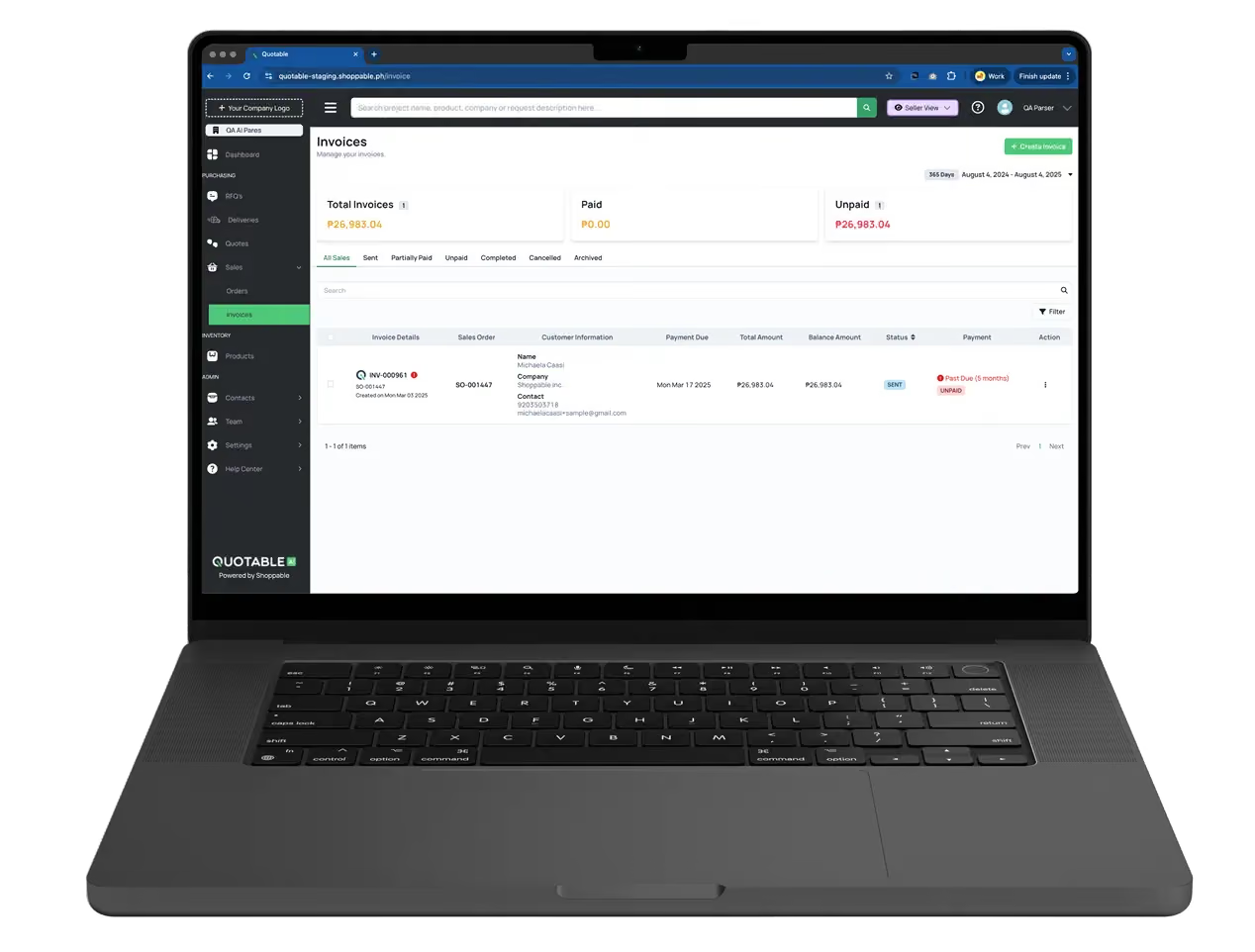
The difference is the operational context around the transfer. When a quote, purchase order, invoice, or order already exists in Quotable, that record can stay connected to the payment. Finance can see what was paid and why without rebuilding the trail from email, spreadsheets, and bank statements.
Quotable Payments can also be used as a standalone payment application. Your supplier does not need a Quotable account to receive an approved payment. Learn more about the international vendor payment workflow or how a multi-currency holding balance can reduce unnecessary conversions.
When Your Existing Bank May Still Be the Better Fit
Keep the bank route when the supplier requires a bank-managed documentary process, the payment depends on a letter of credit or documentary collection, the corridor is not supported by your payment platform, or your treasury policy requires the transaction to remain with an existing bank. The right answer is the route that fits the transaction—not a blanket rule to replace every bank wire.
Keep the Invoice and Payment in One Reviewable Trail
Share your usual USD-to-PHP volume, supplier routes, and payment frequency. The Quotable team can review the approved routes and pricing available for your setup.
Request Quotable Payments Access
Related Philippine business-payment definitions
Review cross-border payment, payment route, local payout, payment cut-off time, payment tracking and failed payment.
Request a Philippine payment corridor review
Frequently Asked Questions
What is the cheapest way to pay a supplier in the Philippines?
The cheapest route depends on the invoice currency, payment value, and FX spread. Compare the rate with the mid-market rate, then add transfer fees, intermediary deductions, and receiving charges. A provider with a low transfer fee can still cost more if its exchange-rate markup is wider.
Can I send an international payment directly through InstaPay or PESONet?
Not by themselves. InstaPay and PESONet are domestic Philippine payment rails. A bank or cross-border payment provider must first handle the international funding, compliance, and currency-conversion leg. The provider may then use InstaPay or PESONet to credit the Philippine beneficiary when that route is supported.
How long does it take to pay a Philippine B2B invoice?
Timing depends on the funding method, currency, route, cut-off, beneficiary bank, and any compliance review. InstaPay credits are generally near-instant for eligible domestic transfers. PESONet is generally same-day before the participating institution’s cut-off on banking days. International wires and cross-border routes may take longer.
Should I pay a Philippine supplier in PHP or USD?
Pay in PHP when the invoice is peso-denominated and the supplier wants certainty about the final amount. Pay in USD when the contract is in USD and the supplier has a suitable USD account. Confirm whether the recipient bank will keep the currency or convert it automatically.
What information do I need to pay a Philippine supplier?
You normally need the supplier’s legal name, address, bank name, account name, account number, settlement currency, and SWIFT/BIC for applicable international routes. Keep the approved invoice and purchase order with the payment record, and independently verify any change to beneficiary details.
Does a Philippine supplier need a Quotable account to receive payment?
No. A supplier does not need a Quotable account to receive an approved payment. The payer must complete onboarding, and currency, route, timing, and recipient availability remain subject to the business, jurisdiction, and approved setup.