The factory quote looks great. The unit price beats your current source, so Vietnam starts to feel like a done deal. Then duty approval, minimum order quantity (MOQ), and the rest of the landed cost land on the spreadsheet, and the number moves.
Vietnam sourcing means weighing suppliers, tariffs, and China-linked input risk together, not one at a time. That's hard to do when you don't have a local team and need to evaluate before you order.
Vietnam works for the right categories and volumes, as long as tariff approval and supplier verification hold up. Build a landed-cost model and a supplier check before the first purchase order (PO). Then every decision you make is one you can defend.
Main Takeaways
- Vietnam sourcing fits categories like apparel, footwear, furniture, electronics assembly, and packaging, when your volume justifies onboarding a new supplier.
- Match your product to its manufacturing region, because location sets trucking distance, quality control (QC) timing ease, and whether you get direct ocean service.
- Verify every supplier through the business registration portal, export records, and factory evidence before sampling. Treat unconfirmed entities as trading companies.
- Build landed cost from freight, duty by Harmonized System (HS) code, fees, and QC. The factory price is only the first line.
- Tariff savings depend on rules of origin. Request the Certificate of Origin, bill of materials, and budget at standard duty rates if inputs stay unclear.
Why Vietnam Sourcing Makes Sense Right Now

Vietnam sourcing is finding, vetting, and buying goods from Vietnamese factories or trading companies. You then import them into your market. Buyers often run it as a China+1 move to spread risk, or as a standalone bet on cost and capacity. It fits best when your category plays to Vietnam's export strengths: apparel, footwear, furniture, electronics assembly, and packaging.
Your volume also has to justify the work of onboarding a new supplier. Output on US lanes is deep. Vietnam shipped $119.6B to the US in 2024, according to VGP Government News. Savings still depend on tariff approval and real MOQs. They also depend on where your supplier's inputs come from.
Why Companies Are Moving Volume to Vietnam
Several drivers keep pulling orders away from coastal China. Labor is cheaper. Wages did rise with the July 2024 minimum-wage increase under Decree 74/2024 and again by about 7.2% on January 1, 2026, under Decree 293/2025, according to Baker McKenzie.
Minimum order quantities (MOQs) are often easier to haggle over than at large Chinese plants, but that flexibility shifts by factory size and category. Export-ready ports and roads help, too. So does a network of 17 Free Trade Agreements (FTAs). Those deals cover more than 80% of global GDP, according to Vietnam's Ministry of Industry and Trade. Those trade deals only pay off when your goods meet origin rules. A Vietnam shipping address doesn't prove that.
Vietnam Manufacturing Hubs by Product Category
Vietnam's factories cluster in a few regional manufacturing hubs, and geography shapes your costs. Pick the wrong region and you'll pay more for trucking, wait longer for factory visits, and lose port options. The table below matches major product categories to their home regions, anchor cities, and nearest deep-water port. Use it to narrow your search before you contact anyone.
| Region | Key Cities / Provinces | Primary Product Categories | Nearest Major Port | Operational Notes |
|---|---|---|---|---|
| North (Red River Delta) | Hanoi, Hải Phòng, Bắc Ninh, Thái Nguyên | Electronics assembly, machinery, hardware, packaging | Hải Phòng / Lạch Huyện | Two new deep-water terminals at Lạch Huyện opened in 2025 with about 1.5M TEU/year of capacity, improving direct US and EU routing (Saigon Times) |
| Central | Đà Nẵng (including former Quảng Nam), Huế | Furniture, handicrafts, stone and marble | Đà Nẵng / Tiên Sa | Smaller factory clusters; QC visits from Ho Chi Minh City take longer to arrange |
| South (HCMC / Mekong Delta) | Ho Chi Minh City (including former Bình Dương), Đồng Nai, Tây Ninh (including former Long An) | Apparel, footwear, textiles, furniture, food processing, plastics | Cát Lái / Cái Mép | Largest concentration of garment and footwear exporters; Cái Mép takes larger vessels, but inland road congestion is a known issue |
The match between product and region drives three costs. It sets how far your goods travel by truck to the port. It decides how easily you can time QC inspections. And it affects whether you get direct ocean service or need transshipment. Sourcing electronics or hardware? Start in the north around Hải Phòng. For apparel and footwear, the Ho Chi Minh City corridor is the default starting point.
A Step-by-Step Framework for Sourcing Products in Vietnam

Sourcing products in Vietnam runs in six steps, and the order matters. Skip one and the gap usually shows up in your margin or your inbox.
- Define your product spec and target landed cost. Write down exactly what you're buying and what it can cost delivered.
- Search for suppliers. Use more than one discovery channel to build a shortlist.
- Verify before you engage. Confirm each supplier is real before samples change hands.
- Sample and test. Measure samples against your spec with one steady checklist.
- Haggle over terms. Lock price, MOQ, payment terms, and lead time in writing.
- Execute your first order. Run it as a pilot with inspection and logistics set up in advance.
Step 1: Define Your Product Spec and Target Landed Cost
Start with a detailed spec covering materials, dimensions, tolerances, packaging, and labeling. Then set a target landed cost that already includes freight, duty, QC, and fees. The factory-gate price is just one line in that total. Before you send a single RFQ, build a one-page spec sheet with a "must-have vs. nice-to-have" column. Suppliers quote more accurately when they know where you'll flex.
Step 2: Search for Suppliers
You've got several ways in. Verified B2B directories and trade shows like Global Sourcing Fair Vietnam give you volume. Freight forwarders and industry contacts give you referrals. A Vietnam sourcing agent or one of the known Vietnam sourcing companies can help too. That fits best if you've no one on the ground. Send your spec sheet to at least five suppliers across two channels before you compare quotes.
Step 3: Verify Before You Engage
Verification comes before sampling. Once samples arrive, you've already spent money and shared your spec with someone you haven't checked. Run every shortlisted supplier through the National Business Registration Portal before you ask for samples. The full checklist appears in the verification section later in this guide.
Step 4: Sample and Test
Order samples from your top two or three verified suppliers. Test each one against your spec and write down every deviation. Plan on two to four weeks for sample production plus shipping. Build a pass/fail checklist tied to your spec sheet, so you judge every supplier by the same standard.
Step 5: Haggle Over Terms
Your talks cover MOQ, unit price, payment terms, lead time, and packaging. First orders usually run on a deposit up front with the balance due before shipment. MOQ deserves its own strategy, and the cost section below covers it in depth. Ask for a formal proforma invoice with every term itemized. Verbal quotes have a way of shifting once production starts.
Step 6: Execute Your First Order
Treat the first order as a pilot. Keep volume at or near MOQ, and confirm your Incoterms up front. Free on Board (FOB) is the standard for Vietnam. Set up your logistics chain before goods are ready. Then book a third-party pre-shipment inspection at 80% production completion.
Run these steps in order and you avoid the two costliest first-timer errors. One is wiring money to an unverified supplier. The other is pricing a product off the factory quote alone.
Build a Landed-Cost Model Before You Quote
Freight, duty by HS code, MPF, and QC all move your unit cost before the first PO ships. This procurement terms guide covers the vocabulary you need to model it right.
Read the Procurement Terms Guide
How to Find Suppliers in Vietnam
You can find suppliers in Vietnam through four main channels. They're verified online directories, trade shows, industry referrals, and local sourcing agents. Each one fills your pipeline in a different way. No channel replaces verification, so check every supplier before you place an order.
Directories give you the widest funnel. Alibaba Verified, Vietnam Yellow Pages, and industry-specific databases surface hundreds of names fast. Filter hard for manufacturers with export licenses and a solid track record in business.
Trade shows like Global Sourcing Fair Vietnam put you face to face with factory reps. You can handle samples side by side and get a feel for who knows their production. Still, a good booth proves very little. Treat the show floor as discovery and save the vetting for afterward.
Referrals come pre-filtered because someone has already worked with the supplier. Freight forwarders, customs brokers, and operators in your category are the best sources. Ask who they've actually shipped with. A name someone has only heard of carries no vetting at all.
When to Use a Vietnam Sourcing Agent
A Vietnam sourcing agent charges either a percentage of order value or a flat project fee. In return, they find suppliers, visit factories, run QC, and coordinate logistics. That's worth paying for when you've no one in-country or don't speak Vietnamese. It also helps when you need to move fast on a new category.
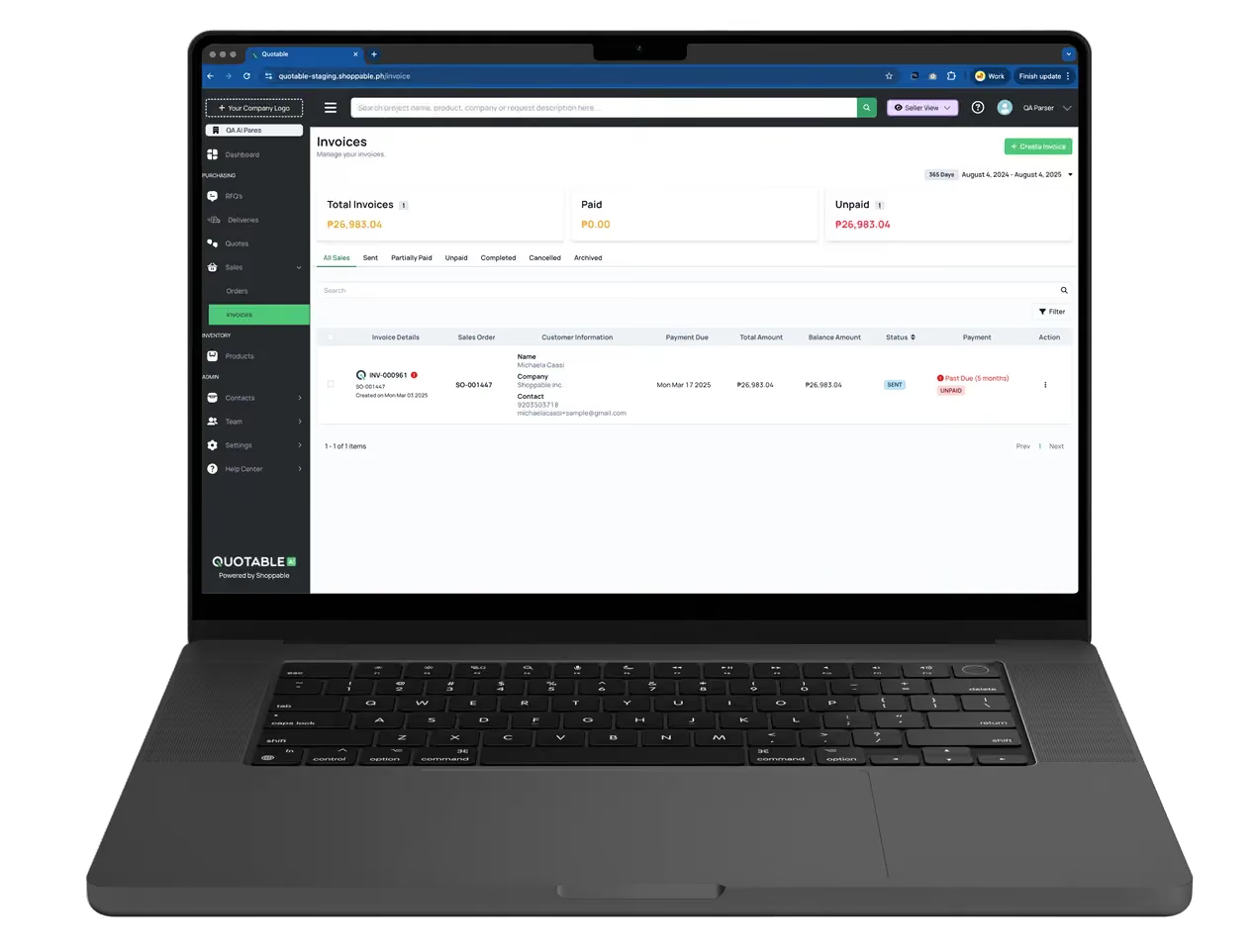
DIY sourcing works when you've the bandwidth to talk to factories directly. You'll need to visit in person and know how to manage overseas suppliers. A third option is managed buying infrastructure. It gives you visibility across RFQs, quotes, POs, and payments while you keep every decision. We built Quotable AI around this model, with the whole cycle from supplier RFQ through international vendor payment in one place. International payments run through Quotable Payments.
Each path costs you something different. Agents cost margin and buy you speed. DIY costs time and gives you full control. A managed platform asks for setup effort and pays back in long-term daily clarity.
How to Verify Manufacturers vs. Trading Companies

Verification tells you whether you're dealing with the factory or a middleman reselling someone else's output. Do it before the deposit leaves your account. Finding out after a wrong shipment lands is the expensive way to learn.
Registration and Document Checks
Start with the official record, then compare it to what the supplier sends you.
- Search the National Business Registration Portal by the company's Vietnamese name or tax ID.
- Confirm the registration date, registered capital, and business scope. A "trading" or "import-export" scope with no manufacturing listed usually means no factory.
- Request the business registration certificate, export license, and any ISO or industry certifications.
- Match the company name on every document to the portal entry. Any mismatch is a red flag.
Export History and Facility Evidence
Paperwork shows a company exists. Shipping records show it actually makes things.
- Ask for a customer reference list and recent export records, such as bill of lading copies or customs declarations.
- Look for steady export volume under the supplier's own name. Trading companies often can't produce those papers.
- Request factory photos or a short video walkthrough of the production lines. A showroom tour doesn't count.
- If they push back or send stock photos, order a third-party factory audit before you go further.
Communication Red Flags
Behavior during early conversations often tells you more than papers do.
- Vague or missing answers to technical production questions.
- Reluctance to allow factory visits.
- Prices well below market, which can mean they're quoting before checking with the real factory.
- Email domains that don't match the company name.
Follow one rule here. Say you can't confirm the entity owns or runs the production facility. Then treat it as a trading company and price your risk to match. A quick portal search plus a request for export papers clears out most trading-company risk. You get that answer before spending anything on samples or flights.
MOQs, Pricing, and Landed-Cost Math
Your landed cost from Vietnam starts with the factory price. Ocean freight, import duty, and customs fees stack on top. QC and service costs add more. The factory quote is only the first line of a much longer total.
What "Flexible MOQs" Actually Means
"Flexible" means lower than a big Chinese plant. It doesn't mean dropship quantities. Apparel minimums tend to run lowest, furniture sits in the middle, and packaging or plastics run highest.
The real number depends on factory size, product complexity, and whether you want a stock item or a custom build. Smaller factories accept lower minimums, but they often take longer and have thinner QC setups.
On a first order, you can trade a larger second-order commitment for a lower MOQ. Get that commitment written into the proforma so both sides hold to it.
Landed-Cost Framework
Landed cost = factory price + ocean freight + import duty (by HS code) + MPF + HMF + QC/inspection + customs brokerage + domestic freight. For U.S. imports, the Merchandise Processing Fee (MPF) is 0.3464% ad valorem, with a $34.58 minimum and $670.86 maximum per formal entry since October 1, 2026, according to CBP. The Harbor Maintenance Fee (HMF) adds 0.125% of cargo value, according to U.S. Customs and Border Protection rules. Ocean freight is the line that swings hardest. Far East to U.S. West Coast spot rates jumped 366% between mid-December 2023 and July 2024, according to The Loadstar, citing Xeneta.
Picture a U.S. importer comparing two orders of 2,000 units each, both with the same factory-price advantage. One is a wooden furniture item under HS 9403.60.80, which carries a free MFN rate. Like most Vietnamese goods, though, it now also pays a 12.5% Section 301 duty, according to Global Trade Alert. Some wooden furniture works differently. Kitchen cabinets, vanities, and upholstered wood seating pay a 25% Section 232 tariff instead, so check your exact item.
The other is cotton T-shirts under HS 6109.10.00, which carry a 16.5% MFN duty, according to the USITC Harmonized Tariff Schedule. The furniture gives up 12.5% of its customs value to that duty. The T-shirts give up 29% (16.5% MFN plus the 12.5% Section 301 duty) before freight even enters the math.
Add MPF and HMF as their own line items in both models. Each fee is small per unit, but across a full container and repeat entries, they become real money. The HS code is the variable most first-time Vietnam importers misjudge, so confirm it before you trust any savings estimate.
Manage Supplier Quotes Without a Local Team
Coordinating RFQs, POs, and payments across overseas suppliers in email and spreadsheets is where orders go wrong. See how importers and manufacturers centralize that workflow.
Explore Quotation Software for Manufacturers
FTA Tariffs and Rules of Origin: What US and EU Buyers Must Verify

Rules of origin are the criteria a product must meet to earn a trade agreement's lower tariff. They cover where materials come from, what processing happens locally, and how much value gets added. Vietnam's trade agreements only reduce your duty when your product passes those tests.
US buyers start from a different place because the US has no FTA with Vietnam. Most goods enter at Most Favored Nation (MFN) rates, the standard duties the US applies to most trading partners. Those rates vary widely by HS code, as the furniture and T-shirt comparison showed.
For US importers, the China+1 tariff gain comes from avoiding China's older Section 301 surcharges on Chinese goods. Vietnam itself gets no preferential rate. Since July 24, 2026, most Vietnamese goods also pay a 12.5% Section 301 duty on top of MFN, according to Global Trade Alert. Chinese goods pay that same 12.5% on top of China's older Section 301 lists, so those older lists are the gap that remains. So model MFN plus the 12.5% Section 301 duty by HS code before you count on tariff savings. Check the rate again before each PO. A US-Vietnam reciprocal trade deal is awaiting signature, and two more Section 301 cases on Vietnam are still open, so the rate could change.
EU buyers can use EVFTA, the EU-Vietnam Free Trade Agreement, which cuts or removes tariffs on most goods. Textiles and apparel face a "fabric-forward" rule, though. The fabric must be woven in Vietnam or an approved cumulation partner such as South Korea. That comes from Vietnam's Ministry of Industry and Trade. Chinese fabric breaks the preference. CPTPP goes further with a "yarn-forward" rule, so the yarn itself must come from a CPTPP member.
The same logic applies across every agreement. If your supplier's bill of materials includes Chinese inputs above the threshold, you pay the full rate.
Before you assume a lower duty, request the supplier's Certificate of Origin and bill of materials. Check that the inputs meet the origin rules of that specific FTA for your HS code. If the papers stay unclear, budget at MFN rates.
Vietnam Sourcing Risks and How to Mitigate Them
Four daily risks come with Vietnam sourcing, and most guides skip them. They're upstream China reliance, ports and roads bottlenecks, quality drift, and lead-time slippage. You can manage every one of them if you plan ahead.
China+1 Reality: Upstream Input Reliance
Upstream China reliance. Many Vietnamese factories rely on Chinese raw materials, components, and semi-finished goods. China made up about 38% of Vietnam's imports in 2024, according to Vietnam Customs. That exposes you twice. A break in China-Vietnam trade can stall your supply, and heavy Chinese inputs can fail FTA origin thresholds.
To mitigate this risk, ask your supplier for a sub-tier sourcing map. Find out where the fabric, components, or chemicals come from. If the answer is vague, assume Chinese inputs and budget for the duty and resilience costs that follow.
Ports, Roads, Quality, and Lead-Time Risks
Ports and roads bottlenecks. Inland congestion slows the southern corridors around Ho Chi Minh City and Cái Mép. Build two to three weeks of buffer into lead times for southern shipments. For direct routing, consider northern suppliers with access to Lạch Huyện.
Quality drift. First samples often look perfect, while the third production run may not. Schedule third-party inspections on every order. Back them with a written quality agreement whose pass/fail criteria tie to your spec sheet.
Lead-time slippage. Lunar New Year closes factories for weeks, and monsoon season adds its own delays. Carriers make it worse, since 2024 schedule reliability hovered around 50 to 55% globally, according to Sea-Intelligence. Plan your PO calendar around known shutdowns. Book freight two to three weeks earlier than feels necessary.
These mitigations work only when they're built into your process before the first order goes out.
What Happens After the First Order

Your first order proves the supplier can deliver once. Scaling takes a system for reorders, QC consistency, supplier scorecards, and payments. Operators without one end up churning through suppliers.
Reorder Management and QC Consistency
Set your reorder cadence from your sell-through rate and the supplier's lead time. Waiting until stock runs out is too late. Build a trigger, such as placing a PO when inventory drops to a set number of weeks of cover. That way, you're always ordering ahead of demand.
Steady quality across runs needs a written quality agreement that carries over from order to order. Track defect rate, on-time delivery, and spec compliance on a simple supplier scorecard. A spreadsheet is enough for the first few orders.
Payment Setup and Supplier Relationship Maintenance
Most Vietnamese suppliers invoice in USD, though some smaller factories quote in VND. Confirm the invoicing currency and payment method before the first PO, and expect wire transfer as the standard. Wire fees and foreign exchange (FX) margins on each payment pile up across reorders.
Quotable AI keeps your POs, invoices, and payment records in one place, so you can track payment status without chasing bank confirmations. For the transfers themselves, Quotable Payments is our cross-border product. Transfers arrive instantly or by next day, depending on the currency, and the whole process runs online. Apply for access.
Relationships carry real weight in Vietnam. Stay in regular contact on Zalo or WeChat, with email as a backup. Visit the factory once or twice a year, and pay on time. That trust is what earns you priority timing in peak season.
Your scorecard should drive your reorder decisions. Track defect rate, on-time delivery percentage, and responsiveness across the first three orders. Then use the results to decide whether to add volume or start approving a backup supplier.
Plan Your Vietnam Sourcing Decision with Quotable AI
You're now equipped to judge whether Vietnam fits your product and your volume. You can back that call with a landed-cost model and verified suppliers. The factory quote is no longer the whole case. Keeping that decision sound past the first PO means your quotes, supplier records, and payments need to live in one place.
That's the work we built Quotable AI to handle. Every supplier comparison stays documented, so you can defend each choice to your team. Reorders and international vendor payments then run on a repeatable process instead of a last-minute scramble.
Paying suppliers overseas? Quotable Payments is our cross-border payment product. Apply for access.
Run Your First Vietnam Order on a Repeatable System
A pilot order with one verified supplier is where the process either holds or breaks. Keep every supplier comparison, PO, and payment in one place from day one.
Start for Free
FAQs About Vietnam Sourcing
How do I know if Vietnam works for my volume and product category?
Vietnam works when your modeled landed cost per unit beats your current source. It must beat it by enough to justify onboarding a new supplier. Build that comparison with duty by HS code, MOQ, freight, and QC included. Volume below the realistic MOQ range is a clear "not a fit" signal. So is a category outside the hub strengths. Test the numbers on a small pilot before you commit.
What if my supplier can't give me origin documents for the tariff rate I'm counting on?
Model your landed cost at the standard duty rate and treat any FTA savings as upside, not baseline. Decide before the PO whether your margin still works at the higher rate. If it doesn't, switch suppliers or change the product spec. Customs can challenge origin claims after entry. Undocumented savings carry audit and back-duty exposure.
How do I run a pilot order without taking on full-scale risk?
Order at or near MOQ from one verified supplier. Set written pass/fail criteria tied to your spec sheet before production starts. Pay against documented milestones, such as a passed pre-shipment inspection. Define in advance which result triggers a reorder, a new round of talks, or a stop. Sample a second supplier at the same time so you keep a fallback.
How do I tell if my Vietnam supplier is slipping on quality or delivery?
Track defect rate, on-time delivery percentage, and spec compliance for every order on a simple scorecard. A worsening trend across two orders in a row is your signal to escalate or approve a backup supplier. Pull the numbers from inspection reports, not supplier self-reporting. Write a threshold into your quality agreement that triggers corrective action, not just a conversation.
Can I manage Vietnam supplier quotes, POs, and payments without a local team?
Yes, if you keep RFQs, quotes, POs, and payment records in one shared system. Don't scatter them across email and chat. You'll need itemized proforma invoices, an agreed currency and payment method, and one owner for supplier records. No tool replaces factory audits or inspections. Language, time zone, and factory-visit needs may still call for a sourcing agent. For cross-border supplier payments, Quotable Payments is available.