


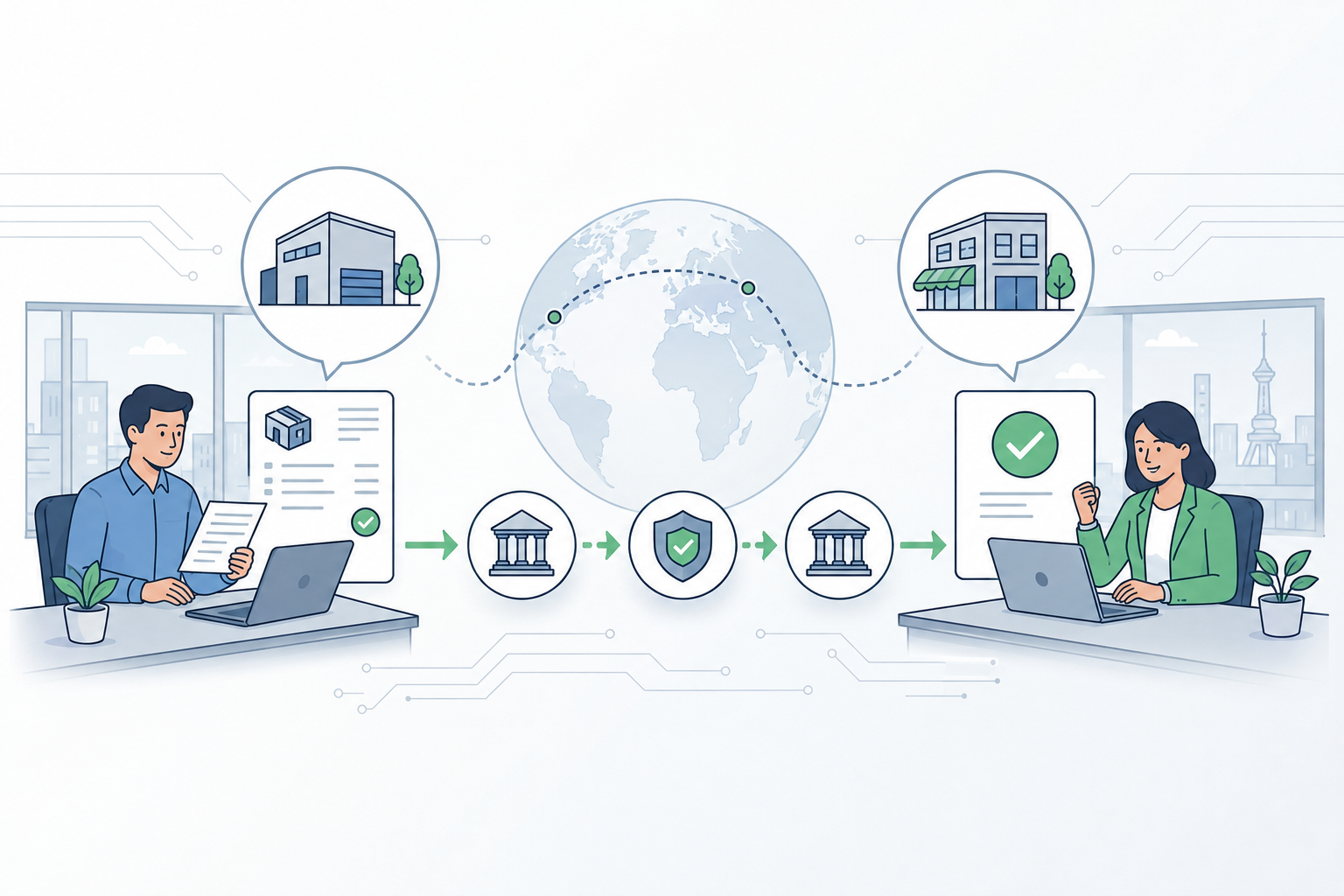
A payment is cross-border when the payer's provider and the Recipient's provider are in different jurisdictions. The currencies do not decide it. A US company can pay a Philippine supplier in USD and still make a cross-border payment because the two providers sit in different countries.
What makes a payment cross-border?
Provider location is the test used by the Bank for International Settlements' Committee on Payments and Market Infrastructures. Currency conversion is a separate question. If the supplier receives Philippine pesos from a US-dollar payment, the transaction is both cross-border and cross-currency. If the supplier receives US dollars, it is cross-border without a currency conversion at payout.
Read the BIS explanation of cross-border payments.
How can the payment reach the Recipient?
The payment can move through a bank wire, one or more correspondent banks, or a payment provider's approved network. The last institution credits the Recipient. Finance still has one job left: match the provider reference and amount received to the invoice that caused the payment.
| Route | Often used for | Check before approval |
|---|---|---|
| International bank wire | Large or occasional transfers and foreign-currency accounts | Intermediary deductions, receiving charges and expected arrival |
| Business payment platform | Recurring supplier invoices and operating payments | Rate, fees, expected Recipient amount and route eligibility |
| Card payment | Supplier checkout and approved business purchases | Supplier acceptance, card limits and foreign-currency pricing |
What determines the total cost?
The visible transfer fee is only one part of the price. Check the exchange rate, fixed fee, intermediary deductions and any receiving charge. Compare the amount debited with the amount expected to arrive.
Total transfer cost = transfer fee + FX cost + intermediary deductions + receiving charges
Capture competing quotes at roughly the same time and use the same amount, currency pair, Recipient and payout method. Otherwise, a market move can look like a provider-price difference.
Paying a business in the Philippines
For a Philippine supplier payment, confirm the invoice currency and the currency of the receiving account. A USD invoice paid into a PHP account may be converted before credit. Ask who sets that rate and whether a receiving or intermediary institution can deduct a charge.
The payment record should retain the invoice or purchase-order reference, approved Recipient, Bank details, funding currency, payout currency, fees, quoted rate and provider reference.
Where Quotable Payments fits
Quotable Payments gives eligible businesses one place to review the Recipient, applicable route, currency, fees and estimated amount received before submitting a payment. Availability depends on the business, jurisdiction, Recipient and approved setup. If Quotable cannot support the required route, the existing bank may remain the practical choice.
Teams paying overseas suppliers can also review the international vendor payment workflow.
Before submitting the payment
- Match the invoice and payment currencies.
- Independently verify new or changed Bank details.
- Review fees, FX and expected Recipient amount together.
- Check the quote expiry and route eligibility.
- Keep the provider reference with the invoice and approval.



