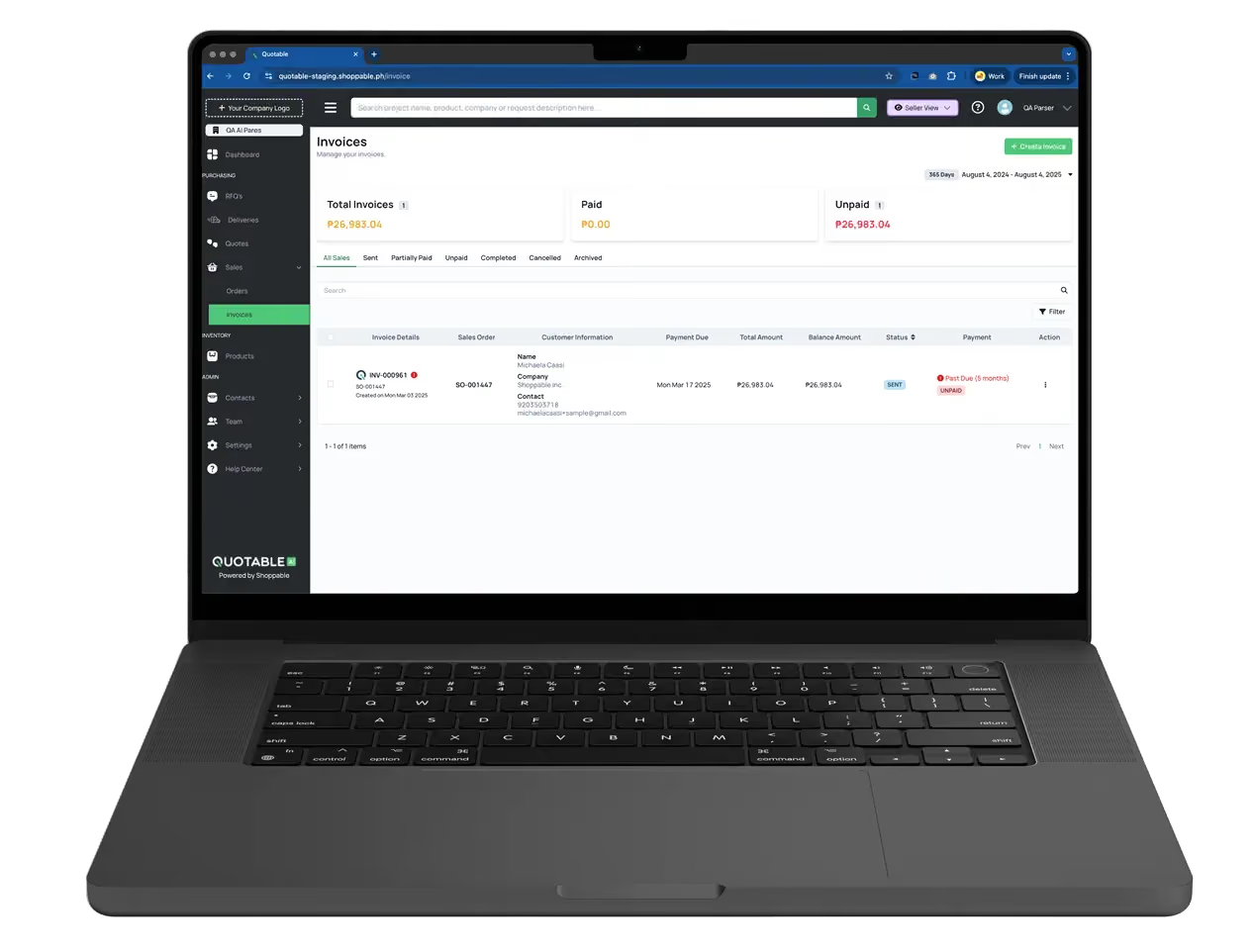
Quote to invoice software helps B2B suppliers carry approved quote data into orders, invoices, payments, and reconciliation without rebuilding the transaction by hand. The value is not only faster document creation. The real gain is fewer mismatches after the customer says yes.
A quote does not become revenue at approval. It becomes revenue when the order is entered correctly, the invoice matches the agreed terms, and payment is collected without another week of chasing documents. For suppliers, distributors, manufacturers, and service teams, the weak point is often the handoff after quote approval: sales has one version, finance has another, procurement sends a purchase order by email, and the invoice gets rebuilt from scratch.
That is where margin leaks out. A missed line item, a changed delivery term, or a copied price from the wrong quote version can turn a signed deal into a dispute. Quote to invoice software should reduce that risk by keeping the transaction record connected from the first quote through final payment.
What quote to invoice software should actually do
At minimum, quote to invoice software should let a team convert an accepted quote into an invoice without retyping the same customer, product, pricing, tax, and payment details. For B2B teams, that is only the starting point.
The better workflow connects the full commercial handoff:
- The quote captures line items, quantities, delivery terms, payment terms, and customer approval.
- The purchase order is matched back to the quote instead of treated as a separate document.
- The sales order or fulfillment record uses the approved quote data.
- The invoice is generated from the same source data.
- Payment status and reconciliation stay tied to the original transaction.
This matters because most errors do not happen in the first quote. They happen when the same transaction is re-entered into another tool after approval.
Where revenue leaks after quote approval
The handoff between quoting and invoicing looks simple from the outside. A customer approves the quote. The supplier sends an invoice. The customer pays.
Inside the business, it is messier. A buyer may approve the quote but send a purchase order with a different format, internal cost code, or partial quantity. Sales may promise a delivery window that operations needs to confirm. Finance may need the invoice to reflect tax, payment terms, discounts, shipping charges, or partial fulfillment. If those details are not carried forward cleanly, someone has to reconcile them manually.
Manual reconciliation is not just admin work. It delays payment and creates avoidable customer friction. A buyer who receives an invoice that does not match the approved quote has a good reason not to pay it yet.
What should carry over from quote to invoice
A quote should become the first transaction record, not a finished PDF that gets thrown over the wall. The invoice should inherit the details that were already agreed:
- Customer legal name and billing details
- Line items, SKUs, descriptions, and quantities
- Unit prices, discounts, taxes, and shipping charges
- Delivery or fulfillment terms
- Payment terms and accepted payment methods
- Approval history and quote version
When these fields stay connected, the finance team spends less time asking sales which version was final. The customer also gets an invoice that is easier to approve because it lines up with the commercial document they already accepted.
How purchase orders fit into the workflow
For many B2B suppliers, the purchase order is the awkward middle step. The seller creates a quote. The buyer turns it into a PO. Then the seller has to match the PO back to the quote before fulfillment and invoicing can move forward.
This is where basic invoicing software usually falls short. It can create an invoice, but it may not understand the relationship between the quote, the buyer's PO, the order, and the payment trail. A disconnected PO can introduce small changes that become expensive later: a missing item, a different shipping address, a new internal reference, or a payment term that does not match the original quote.
A stronger quote to invoice workflow gives both sides a cleaner path. The buyer can review the quote, send or reference a PO, and move the transaction forward without forcing the supplier to rebuild the record manually.
Static PDFs create version problems
PDF quotes are easy to send, but they are poor transaction records. They are hard to update, hard to parse, and easy to lose inside an email thread. If a sales rep sends Quote v3 but the buyer's procurement team is still working from v1, the business has a dispute waiting to happen.
That does not mean PDFs disappear completely. Many customers still want a PDF copy for their records. The issue is using the PDF as the only source of truth. A modern workflow can still generate a PDF while keeping the actual quote data structured inside the system.
The distinction matters. A PDF is an output. The quote record is the operating source.
When automation helps, and when it creates more cleanup
Automation is useful when it removes low-judgment work: copying line items, preparing invoice drafts, matching purchase orders, checking whether required fields are missing, and routing the transaction to the right person for review.
It creates problems when it hides commercial decisions. Pricing exceptions, contract terms, tax treatment, delivery commitments, and customer disputes still need accountable human review. A good system prepares the record. It should not pretend that every exception can be solved by pushing data from one screen to another.
For suppliers processing a growing volume of orders, this is the practical test: can the system reduce duplicate entry while keeping the team in control of exceptions?
Where AI can shorten the quote-to-payment cycle
AI is most useful around the messy documents that surround B2B transactions. A buyer may send an RFQ as a spreadsheet, a PDF, a scanned document, or an email attachment. A supplier may receive purchase orders in several customer-specific formats. Someone has to read those documents and turn them into usable transaction data.
AI parsing can help by extracting line items, quantities, prices, delivery details, and payment references so the team starts from a prepared record instead of a blank spreadsheet. That still needs review. The point is not to remove the finance or sales team from the workflow. The point is to stop making them retype information that already exists.
Used well, AI shortens the time between a customer request, an approved quote, and an invoice that can be paid. Used poorly, it just creates a faster way to generate documents nobody has checked.
What B2B suppliers should look for
Most teams do not need a giant platform replacement on day one. They need a quote-to-invoice workflow that fits the bottleneck they actually have.
Invoices do not match quotes
Look for quote-to-invoice conversion from shared source data. This reduces disputes and manual checking because finance is not rebuilding the invoice from a separate record.
Customer POs arrive in different formats
Look for purchase-order intake and document parsing. This helps match buyer documents to seller records without forcing the team to manually decode every customer format.
Sales and finance work from different systems
Look for shared transaction status and approval history. Both teams need the same view of the deal before the invoice goes out.
Payments are hard to reconcile
Look for payment links and payment status tied to the invoice. This reduces follow-up and makes it easier to match payments to the right customer record.
Operations misses fulfillment details
Look for an order and fulfillment handoff from the accepted quote. Delivery promises should stay aligned with what the customer approved.
How Quotable AI approaches quote-to-payment workflows
Quotable AI is built for B2B teams that need quoting, procurement, invoicing, and payments to stay connected. The product direction is simple: the quote should not die as a PDF after the customer approves it. It should become the record that helps the team move the transaction through approval, purchase-order intake, fulfillment, invoicing, and payment.
That means no-login buyer links, structured transaction records, document intake, and payment workflows that are designed around how B2B suppliers and buyers actually work. The buyer should not need to adopt another portal just to move a deal forward. The seller should not need to rebuild the same transaction five times.
Quotable is not the right fit for every business. If you only send a few simple invoices each month and do not manage quotes, POs, fulfillment, or payment reconciliation, a basic invoicing tool may be enough. The pain starts when the approved quote becomes the start of several disconnected workflows.
Still rebuilding approved quotes into invoices by hand?
Quotable AI can help your team map a cleaner quote-to-payment workflow before the handoff becomes a finance problem.
Frequently Asked Questions
What is quote to invoice software?
Quote to invoice software converts an approved quote into an invoice while carrying over customer details, line items, pricing, terms, and approval context. For B2B teams, the best systems also connect purchase orders, fulfillment, payments, and reconciliation.
Why do B2B suppliers need quote to invoice software?
B2B suppliers need it when manual handoffs create invoice errors, delayed billing, disputed payments, or extra work between sales, operations, and finance. The main benefit is keeping one transaction record consistent after the customer approves the quote.
Is quote to invoice software the same as invoicing software?
No. Invoicing software helps create and send invoices. Quote to invoice software connects the earlier commercial step, the quote, to the later invoice and payment workflow. That matters when quotes, purchase orders, fulfillment details, and payment terms all need to match.
Can AI help with quote to invoice workflows?
Yes, AI can help read RFQs, purchase orders, spreadsheets, PDFs, and other transaction documents. It is most useful when it prepares structured data for review instead of forcing teams to retype every line item manually.
When is a basic invoicing tool enough?
A basic invoicing tool may be enough if the business sends simple invoices and does not rely on quote approvals, customer purchase orders, partial fulfillment, or complex payment reconciliation. Once those handoffs matter, a connected quote-to-payment workflow is usually stronger.